Dental air conditioning for UK businesses is really about patient comfort, calm treatment rooms and quiet outdoor placement. A surgery that feels stuffy shows up in appointment anxiety. A unit that rattles through a filling shows up in reviews. A condenser that annoys the flat next door shows up as complaints, even when the indoor rooms feel fine.
This guide helps dental and clinic businesses plan cooling that respects clinical quiet, waiting-room first impressions and neighbour-friendly outdoor plant. We cover why clinics differ from offices, treatment-room options, noise and outdoor siting, summer peaks, when a lighter scheme is enough, and when a survey beats a brochure. When you want eyes on the site, Commercial AC Installation can arrange support with trusted installers and a free site survey.
Why dental and clinic spaces need a different brief
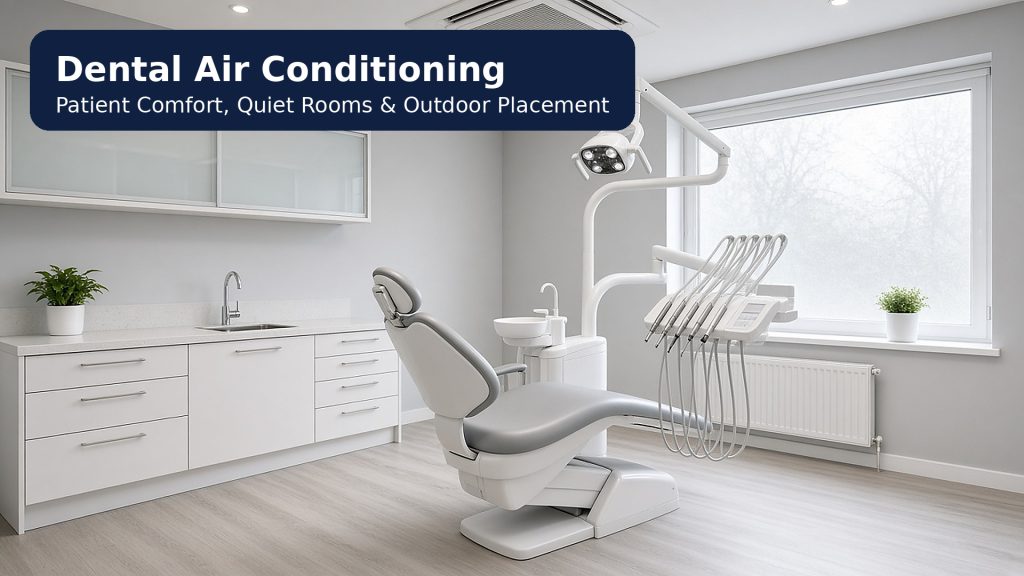
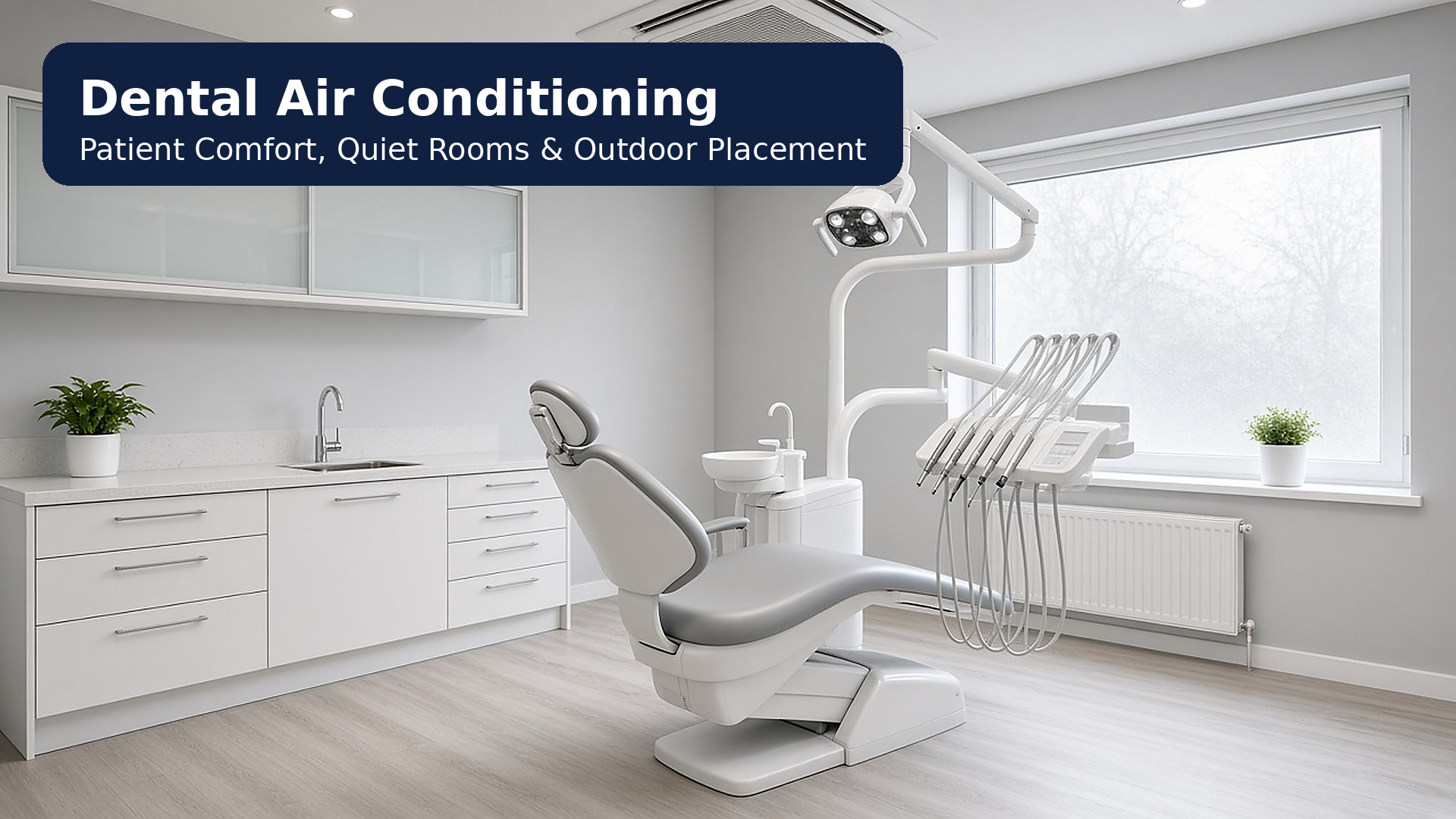
A dental practice is a cluster of small, high-stakes rooms plus a public waiting area. Patients sit still under bright lights. Staff move between surgeries, decontamination and desks. Doors open constantly. Privacy and low background noise matter more than in a typical open-plan office.
Heat loads are modest compared with kitchens or gyms, but comfort tolerance is low. Cold draughts across a chair, uneven temperatures between rooms, and outdoor plant noise through a courtyard window all hurt the experience. Staff retention also suffers when treatment rooms swing from warm mornings to icy afternoons.
UK summers add solar gain through street-facing windows and fuller appointment books. A system that “felt fine” in May can struggle when every chair is booked and the waiting room fills. Soft workplace comfort context sits in maximum workplace temperature UK; there is no single legal maximum air temperature for all workplaces.
Patient comfort in treatment rooms and waiting areas
Treatment rooms need stable, gentle cooling without blasting the patient. Waiting rooms need a welcoming first impression without fridge-like reception desks. Offices and staff rooms can run a little differently, but they still share outdoor plant and electrical capacity.
Practical survey points for businesses:
- How many chairs run at once at peak, and which rooms face glass or plant rooms?
- Can indoor units sit where service access does not fight cabinetry or ceiling-mounted lights?
- Where will condensate go without crossing clinical floors awkwardly?
- Which rooms must stay especially quiet during longer procedures?
Design-led interiors often prefer discreet ducted air conditioning outlets or low-profile cassettes. Smaller rooms may suit quiet wall splits when outdoor positions allow. Office-adjacent admin space often follows the same logic as office air conditioning.
Comfort cooling supports the practice. It does not replace clinical ventilation or infection-control ventilation strategies. Follow current professional guidance for those requirements and coordinate plant so comfort equipment is not asked to do a job it was never designed for.
Quiet outdoor placement for clinic businesses
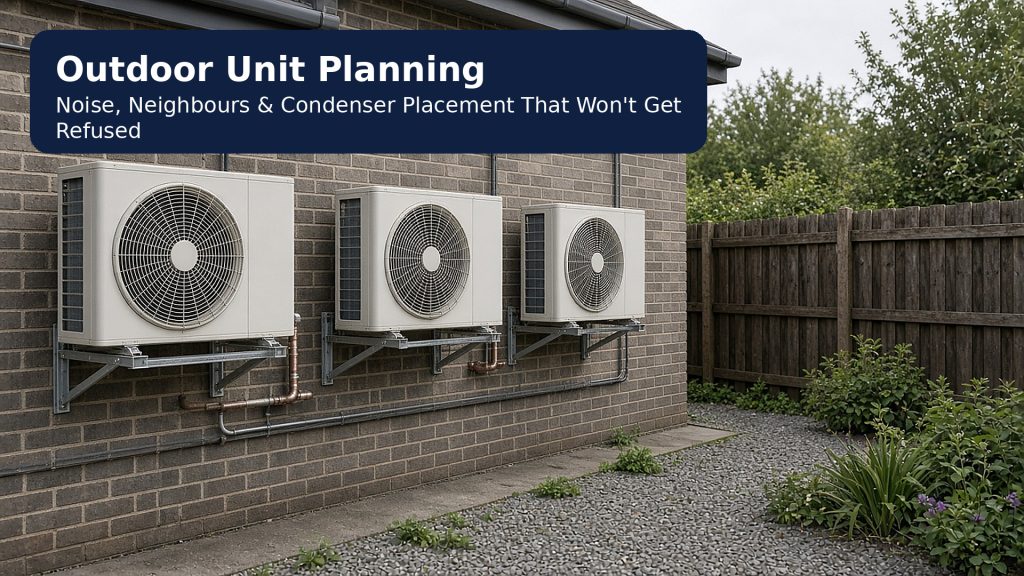
Outdoor condensers are where many clinic projects succeed or fail socially. Street-facing walls, shared yards, flat roofs above consulting rooms, and boundaries with homes all create different constraints.
Useful planning habits:
- Prefer positions with clear airflow and service access, not cramped lightwells that recirculate hot air
- Think about evening and weekend running, not only weekday lunch peaks
- Ask for manufacturer sound data and realistic distances to the nearest windows
- Treat landlord, freeholder and neighbour conversations as part of the project, not an afterthought
Commercial outdoor plant often needs planning permission; permitted development rules that people quote for small domestic heat pumps do not automatically apply to clinic condensers. Noise nuisance can still be investigated by environmental health even when planning is sorted. This is practical guidance, not legal advice: check your local planning authority, lease and any listed-building or conservation constraints before you commit to a wall.
Hospitality sites face similar neighbour and heat tensions; restaurant air conditioning is a useful parallel on outdoor siting discipline.
Dental air conditioning options for businesses
When businesses search for dental air conditioning, they usually choose among a few practical families:
| Option | Often suits | Pros | Cons / watch-outs |
|---|---|---|---|
| Cassette | Surgeries with ceiling grid | Even throw, tidy look | Needs void and access; poor placement causes draughts on the chair |
| Ducted | Design-led clinics, discreet interiors | Quiet grilles, flexible layout | Design quality matters; filter and grille access must be planned |
| Wall split | Small rooms, offices, staff areas | Lower cost, quicker install | Visible; outdoor units multiply if every room gets its own condenser |
| Multi-split / light VRF | Several surgeries + waiting + offices | Zoning, fewer outdoor footprints | Needs proper design and pipe/condensate planning |
Server or IT cupboards in larger practices are a different brief again. If you have dense IT heat, see server room air conditioning rather than stretching comfort kit.
Noise indoors, summer peaks and running reality
Patients hear everything. Indoor fan noise, rattling panels and aggressive air throw undermine clinical calm. Commission for the speeds you will actually use with a patient in the chair, not only the loudest boost setting on a brochure.
Summer peaks combine full diaries, solar gain and hotter outdoor air. Doors open between rooms undo careful setpoints. Controls and zoning help; so does honesty about how the practice runs on a busy Thursday afternoon.
Running costs follow hours of use, setpoints and maintenance more than slogans. For orientation, see commercial air conditioning running costs. Filter discipline and F-Gas-aware servicing sit under commercial air conditioning maintenance. Larger systems may also need awareness of TM44 air conditioning inspection duties where they apply.
Pros, cons and when dental AC is not the right fit
Quiet cassette or ducted surgeries, pros and cons
Pros: Calm patient comfort when designed well; professional look; workable with multi-room zoning. Cons: Install disruption in fitted surgeries; poor grille placement creates draughts; access panels must respect clinical fit-out.
Shared outdoor plant (multi-split / VRF), pros and cons
Pros: Fewer condensers on scarce elevations; room-level control; scalable for growing chair counts. Cons: Design quality matters; pipe routes and condensate need early planning; one bad outdoor position still affects the whole scheme.
When it is not the right fit
Dental comfort AC is the wrong primary answer when:
- Clinical ventilation gaps are the real complaint and cooling is being asked to mask them
- You have no viable outdoor plant location and no alternative strategy
- A single admin office only needed a small split, not a full-clinic scheme
- Existing plant mainly needs maintenance, controls or acoustic remediation of a poor outdoor site
Sometimes the honest survey outcome is reposition outdoor plant and rebalance indoors, not rip everything out. That still saves money compared with buying the wrong system twice.
How Commercial AC Installation can help
Commercial AC Installation helps UK dental and clinic businesses arrange support with trusted installers for quiet, patient-focused cooling. A free site survey or quote typically covers treatment-room comfort, waiting areas, outdoor siting and neighbour noise.
We will not pretend a catalogue cassette fixes a ventilation gap, or that every surgery needs the same indoor type. The survey should match how you actually run chairs, hours and neighbours.
When you are ready, contact Commercial AC Installation to request a quote or book a free site survey for dental air conditioning, or start from our commercial air conditioning installation page.
What is the best dental air conditioning for businesses?
There is no single best system. Treatment rooms often suit quiet cassettes, ducted outlets or carefully placed splits; waiting rooms need gentle comfort without cold draughts; offices and decontamination areas may need separate setpoints. The right mix depends on room count, ceiling type, outdoor plant space, noise limits and how you schedule chairs through the day.
How quiet should dental clinic air conditioning be?
Patients notice fan noise and cold jets more than brochure efficiency numbers, especially during longer treatments. Indoor units should be selected and commissioned for low sound levels at typical fan speeds. Outdoor condensers near residential neighbours, courtyard gardens or consulting rooms with open windows also need careful siting and, where relevant, acoustic screening discussed with the right professionals.
Can one outdoor unit serve several dental treatment rooms?
Often yes, via multi-split or light VRF designs that share outdoor plant while keeping room-level control. That helps when roof or yard space is limited. It still needs proper pipe routes, condensate planning and zoning so a busy surgery does not freeze the empty waiting room. Compare multi-split versus VRF guidance on our Insights pages for the decision shape.
Does dental air conditioning replace clinical ventilation requirements?
No. Comfort cooling is not a substitute for ventilation strategies required for clinical spaces. Practices should follow current professional and regulatory guidance for ventilation and infection control. Air conditioning can support patient and staff comfort, but it must be coordinated with how rooms are ventilated and used, not sold as a complete clinical air solution on its own.
When is dental air conditioning not the right first step?
If the main problem is a poorly maintained existing system, blocked outdoor airflow, or a single overheated cupboard that only needs a small local fix, a full-clinic scheme may be premature. Portable units in patient-facing rooms are usually a poor long-term answer because of noise, trip hazards and uneven comfort.
How can Commercial AC Installation help with dental air conditioning?
Commercial AC Installation can arrange support with trusted installers for a free site survey or quote. That typically covers treatment-room comfort, quiet indoor selection, outdoor siting and neighbour noise, without locking you into a catalogue pick before the building is understood.