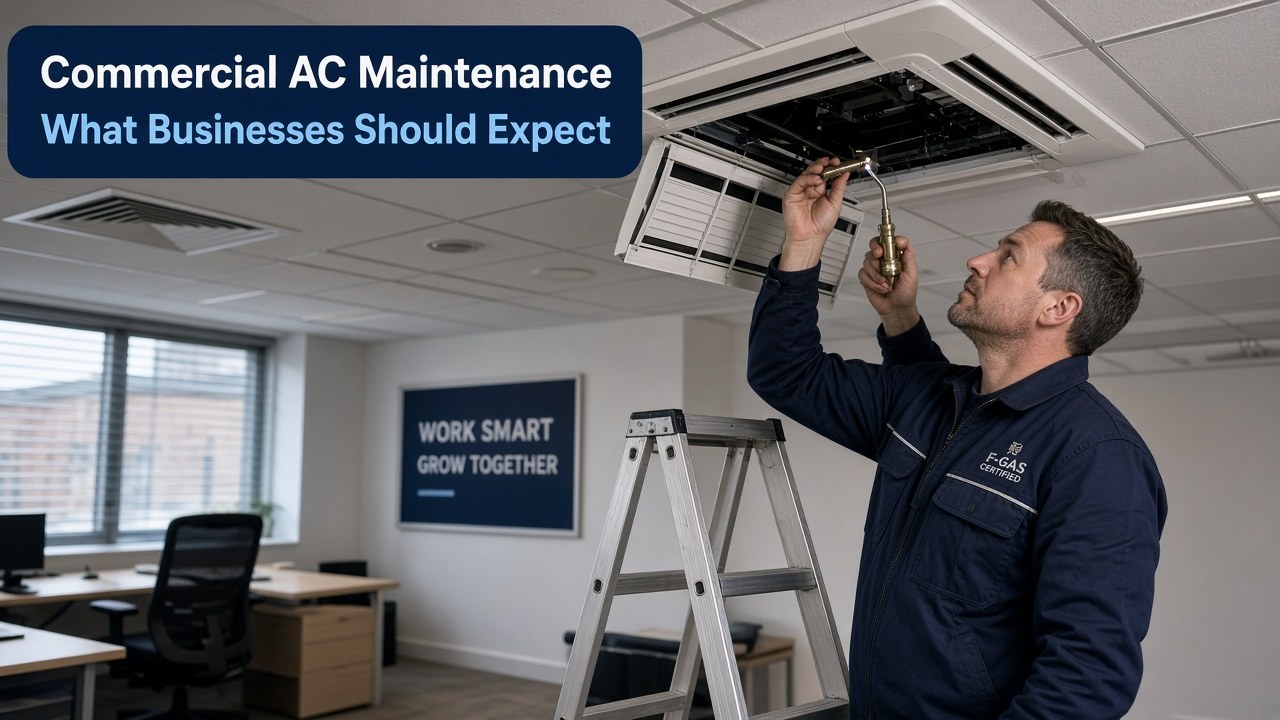
Commercial air conditioning maintenance is where comfort and compliance meet — and where UK businesses get surprised. A sticker on the outdoor unit is not a plan. Neither is waiting until the hottest Tuesday of the year to discover the filters and the F-Gas records are both a mess.
This guide sets clear expectations: what good servicing includes, how PPM contracts compare with reactive call-outs, why F-Gas leak checks are not TM44 and not “a service,” practical filter/coil/condensate care, and balanced pros and cons of contracts. Commercial AC Installation can arrange support with trusted installers when you want a maintenance approach built around your actual kit list.
What good commercial AC servicing includes
A proper visit is more than a quick filter wipe and a smile.
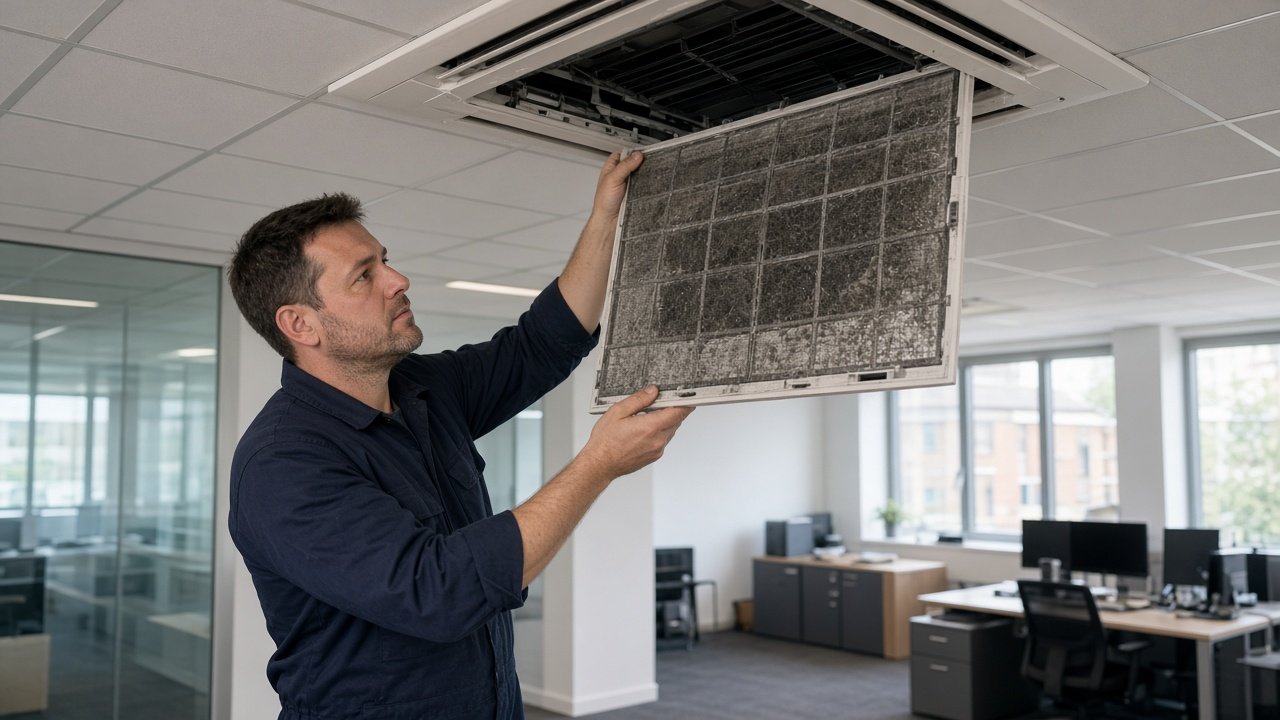
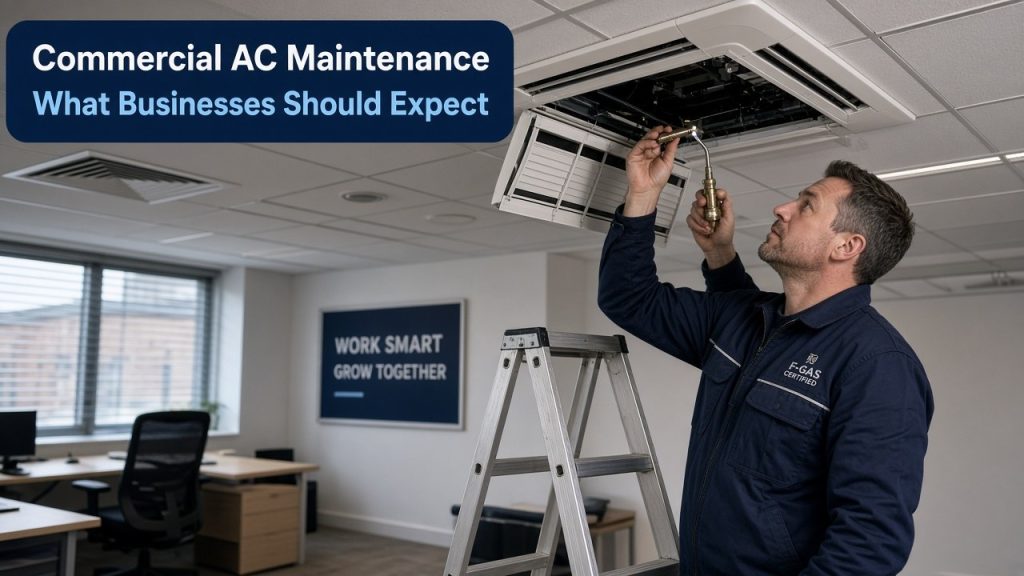
Typical commercial air conditioning servicing tasks include:
- Cleaning or replacing indoor filters
- Checking indoor coils and fans for dust, grease or blockage
- Inspecting outdoor coils and clearances (debris, vegetation, blocked airflow)
- Testing condensate drains and pumps — overflows cause stains, shutdowns and unhappy landlords
- Reviewing controllers, schedules, setpoints and obvious misuse
- Checking electrical connections and safety devices within the engineer’s scope
- Reading error histories and investigating short-cycling or odd noises
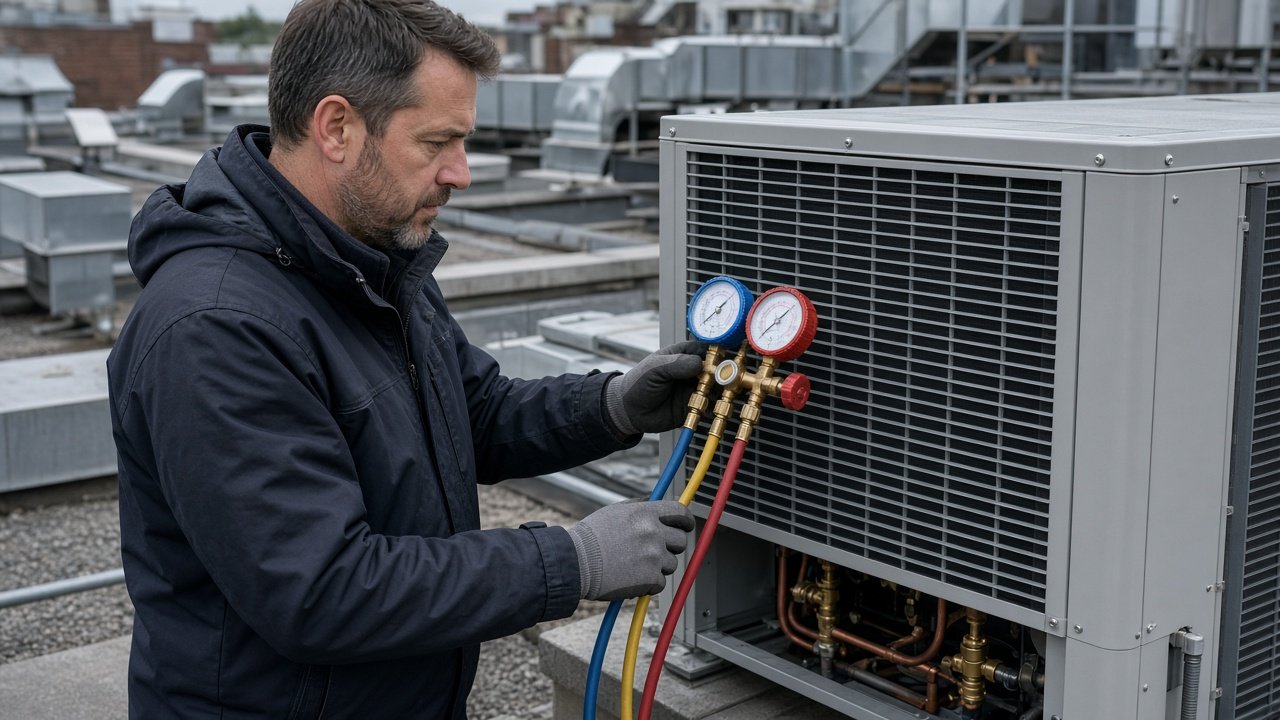
- Refrigerant leak checks and related F-Gas work where thresholds and rules require them, by certified engineers
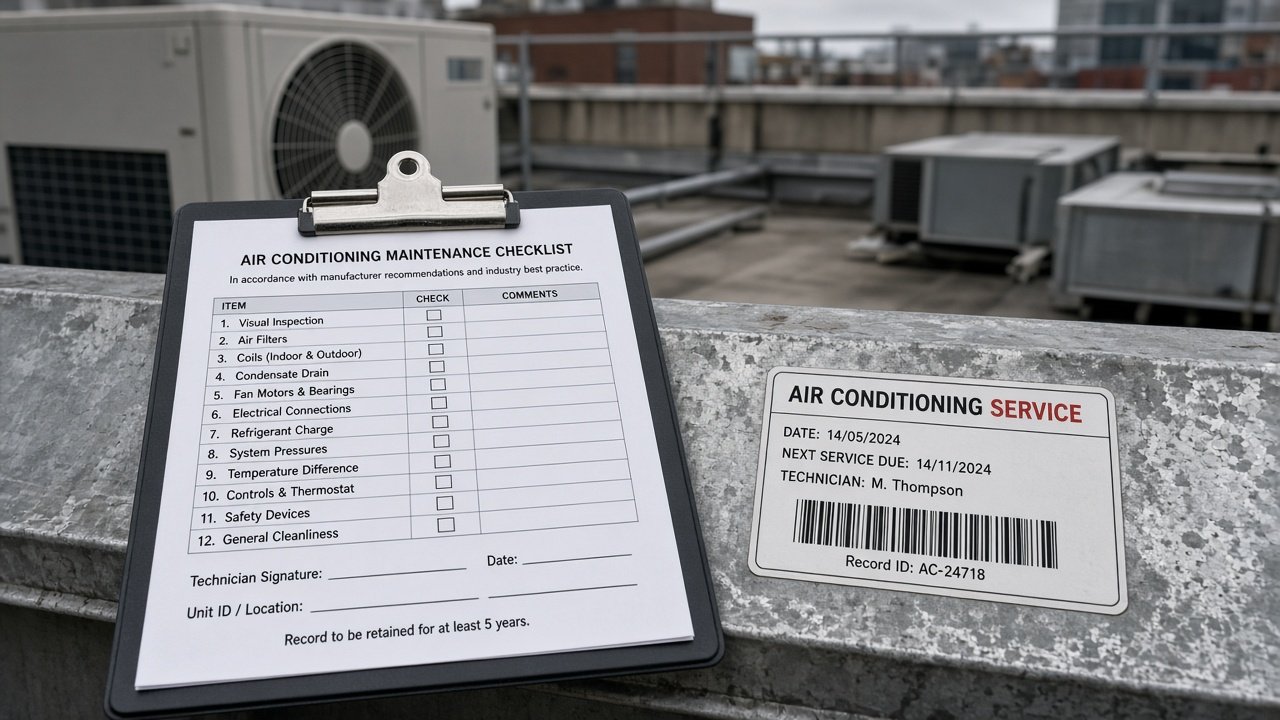
- Leaving service sheets and updating your records
What it is not: a full strip-down of every component every time, a substitute for emergency repair when something has already failed hard, or an energy certificate. If you need urgent help after a failure, see emergency commercial air conditioning repair.
PPM contracts vs reactive call-outs
Businesses usually land in one of two patterns — or a hybrid.
| Approach | How it works | Best for | Watch-outs |
|---|---|---|---|
| PPM / planned servicing | Scheduled visits, agreed checklist, documented reports, often priority response | Occupied offices, retail, multi-site portfolios, compliance-minded FMs | Contract must list kit and scope clearly; “cheap PPM” that skips coils helps nobody |
| Ad-hoc / reactive | Call when something breaks or someone complains | Very small systems, low criticality, tight short-term budgets | Higher risk of peak-season downtime; weaker paperwork trail; filters forgotten for years |
| Hybrid | Planned filter/coil care + reactive for faults | Sites building a maintenance culture | Still need clarity on who holds F-Gas records and who attends leaks |
PPM is not automatically expensive vanity. For many businesses it is cheaper than one lost trading week plus overtime call-outs. Reactive-only can be rational for a single little split in a low-risk space — until the first August failure teaches an expensive lesson.
F-Gas records vs TM44 (they are not the same)
This mix-up wastes time in facilities meetings every year.
- Routine servicing keeps the system clean, draining and controlled. It supports reliability and efficiency.
- F-Gas rules cover fluorinated refrigerants: certified handling, leak prevention, leak checks based largely on charge in tCO₂e, and operator record-keeping. Per GOV.UK, leak checks are generally required from 5 tCO₂e (hermetically sealed thresholds differ — GOV.UK notes the hermetic exception), with frequencies roughly 12 / 6 / 3 months by charge band, intervals that can double with working automatic leak detection, and automatic detection generally required at 500+ tCO₂e. See our F-Gas regulations guide.
- TM44 is a separate energy inspection under EPBR for many non-domestic air conditioning systems with effective rated output more than 12kW in England and Wales (combined units under single control can push you over). Inspections must be no more than five years apart. GOV.UK cites a £300 fine if you do not get inspected every five years where required (get your air conditioning system inspected). Scotland and Northern Ireland can differ. Details: TM44 air conditioning inspection.
Completing a spring service does not lodge a TM44 report. Passing a TM44 inspection does not replace F-Gas leak checks. Keep the paperwork streams distinct even if the same trusted installer helps you arrange support across them. This framing is practical guidance aligned to published GOV.UK pages — not a substitute for reading the latest official text for your site.
Filters, coils and condensate — the practical trio
If you only remember three physical items between formal visits, make them these.
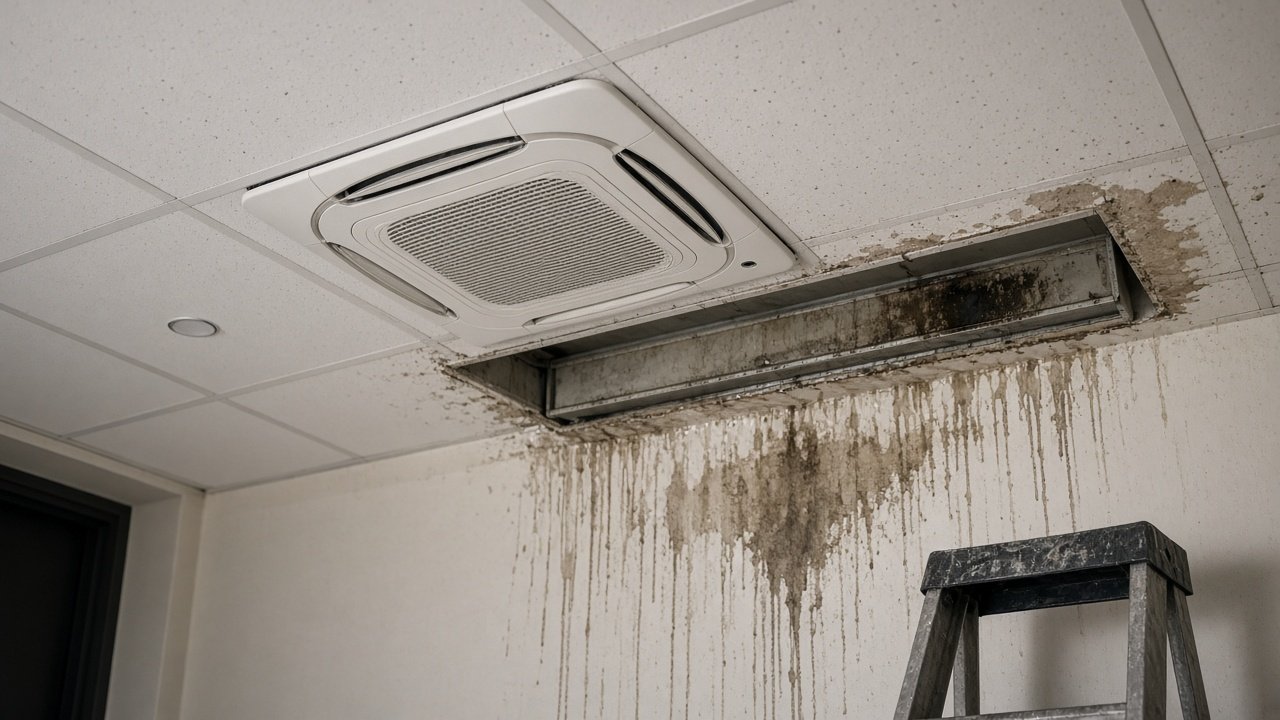
Filters — Clogged filters raise energy use, cut airflow and create comfort complaints that look like “the AC is undersized.” In dusty or long-hours spaces, interim filter attention between full services is often worthwhile.
Coils — Dirty indoor or outdoor coils hurt heat transfer. Outdoor units on roofs collect pollen, fluff and urban grime. Indoor coils behind neglected filters slowly lose capacity.
Condensate — Blocked drains and failed pumps cause water damage and safety cut-outs. After a pump failure once, most businesses suddenly care a lot about condensate paths.
None of this replaces professional diagnostics when you have refrigerant or electrical faults. It does explain why “we serviced it last year” is not the same as “filters have been breathable all summer.”
How often should businesses plan visits?
Be wary of anyone inventing a single statutory “must service every X months” for all commercial comfort AC. What you do have are:
- Practical servicing intervals driven by runtime, environment and criticality — commonly one or two planned visits per year for many offices, with dirtier or 24/7 spaces needing more frequent filter and visual checks
- F-Gas leak-check intervals driven by refrigerant charge (tCO₂e thresholds on GOV.UK), which may or may not line up with your preferred service months
- Manufacturer guidance and warranty conditions that expect maintenance
Align planned visits with pre-summer and pre-winter where you can. Critical spaces (busy retail floors, dense offices, anything near server room cooling) deserve tighter attention than a rarely used meeting annex.
Work involving refrigerants must be done by appropriately F-Gas certified engineers and companies. That is the competence track for standard commercial AC gas work — not an invented MCS requirement for every commercial cassette.
Pros and cons of maintenance contracts
Pros of a solid PPM-style arrangement
- Fewer surprise failures in peak weather
- Clearer F-Gas and service documentation
- Priority response when something does break
- Better running efficiency when filters and coils stay in shape — see running costs
- Easier budgeting than pure panic call-outs
Cons / watch-outs
- Poor contracts that only tick boxes without real coil or drain attention
- Paying for visits on mothballed kit you no longer use
- Ambiguity over parts, refrigerants and out-of-hours rates
- Assuming the contract covers TM44 when it does not
When a heavy contract is not the right fit
A comprehensive multi-visit PPM may be overkill if you have one small split in a low-use space and can reliably schedule an annual service yourself. It is also the wrong medicine if the plant is end-of-life and constantly failing — at that point you need a repair or replace decision, not a thicker service folder.
Arranging support without the jargon fog
Good maintenance conversations start with an asset list: make, model, location, approximate age, known faults, and who currently holds F-Gas records. Photos of outdoor units and controllers help. So does honesty about access hours and landlord rules.
Commercial AC Installation can arrange support with trusted installers for servicing plans, PPM-style agreements or help sorting reactive issues and compliance paperwork streams. We will not invent legal visit frequencies that do not exist — we will help you match practical care to how hard the plant works.
Request a quote or a free site survey when you want a maintenance approach that fits your businesses’ premises, not a generic checklist photocopied from another site.
What does commercial air conditioning maintenance include?
Good servicing typically covers filter cleaning or replacement, checking indoor and outdoor coils, fans and electrics, condensate drains and pumps, control operation, error logs, and refrigerant integrity work by F-Gas certified engineers where required. It should leave you with records, not just a sticker on the unit.
How often should businesses service commercial air conditioning?
Practically, many workplaces plan visits around usage intensity — often one or two planned services a year for comfort systems, with dirtier or longer-hours sites needing more filter attention. Separately, F-Gas leak-check intervals depend on refrigerant charge in tCO2e per GOV.UK guidance, not on a marketing calendar. There is no single invented statutory “service every X months” rule for all commercial comfort AC.
Is F-Gas the same as TM44 or routine servicing?
No. F-Gas covers refrigerant handling, leak checks and records. TM44 is a separate energy inspection duty for many non-domestic systems with effective rated output more than 12kW in England and Wales (inspections no more than five years apart). Routine servicing keeps plant healthy and efficient. Completing one does not automatically satisfy the others.
What is a PPM contract for commercial AC?
Planned Preventive Maintenance (PPM) is a scheduled contract for inspections and servicing at agreed intervals, often with priority response and documented reports. It contrasts with purely reactive call-outs after a failure. PPM suits businesses that cannot afford mid-summer downtime or scrambled compliance paperwork.
Does maintenance reduce commercial AC running costs?
Usually yes when filters, coils and controls are kept in shape and refrigerant charge is correct after any leak repair. Neglected plant runs longer to deliver the same comfort. Maintenance is not a magic tariff cut, but it is one of the most reliable operational levers businesses have.
How can Commercial AC Installation help with maintenance?
Commercial AC Installation can arrange support with trusted installers for servicing, PPM-style agreements or help when you need to sort reactive issues and records. Request a quote or a free site survey to match a maintenance plan to your kit list and operating hours.