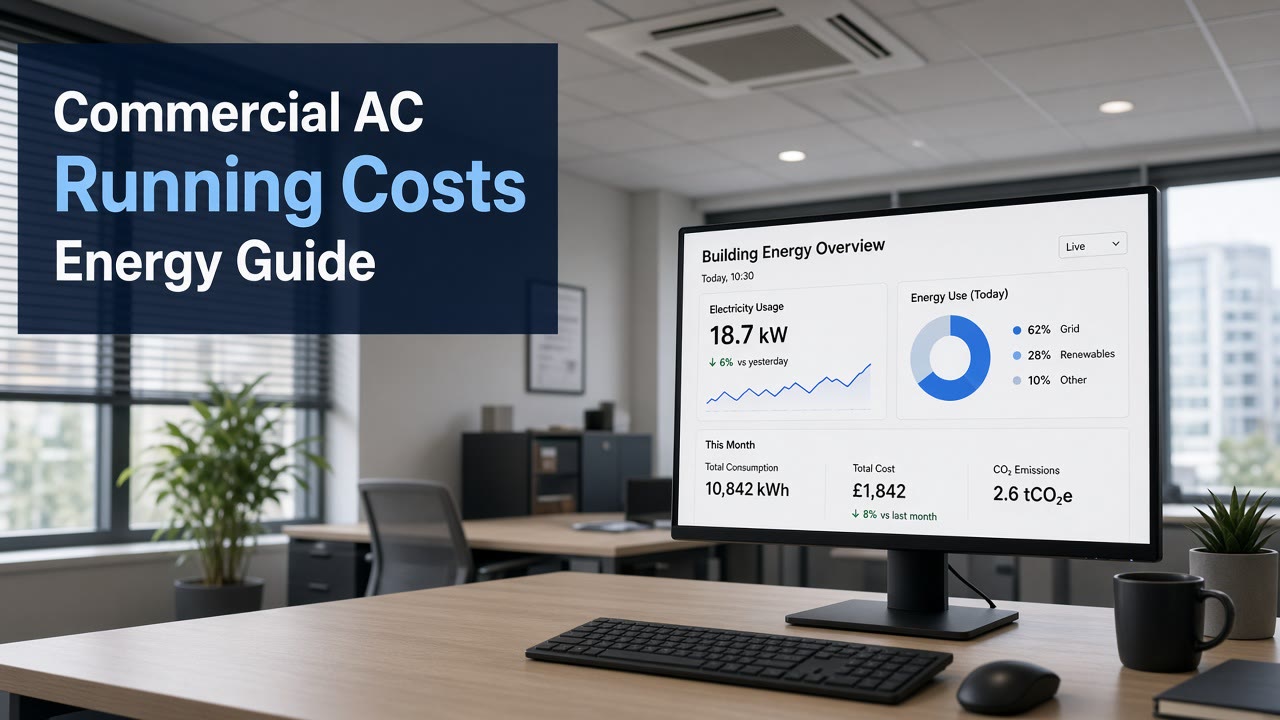
Nobody opens an electricity bill and thinks, “delightful.” For many workplaces, cooling and heating through air conditioning is a quiet but stubborn slice of that cost. Understanding commercial air conditioning running costs is less about a single magic number and more about knowing what pushes kWh up — and what you can change without turning the building into a sauna.
This guide covers what drives energy use, a plain-English look at SEER and SCOP, how maintenance and controls affect commercial AC energy efficiency, and when inefficient kit starts costing more than a planned upgrade. Figures below are illustrative only — your tariff, hours of use and building fabric will shift the outcome. Use them as orientation, then measure your own site.
What actually drives commercial AC energy use?
Air conditioning spends most of its electricity on compressors and fans. The longer and harder they work, the higher the bill. Heat gains, operating hours, setpoints, outdoor temperature, seasonal efficiency, control quality, maintenance condition and part-load behaviour all matter. In short: runtime × load × inefficiency.
Illustrative cost framing (not a fake £/hour promise)
Tariffs vary. So do systems. Treat the following as illustrative ranges to support a conversation with your energy manager — not as a quote.
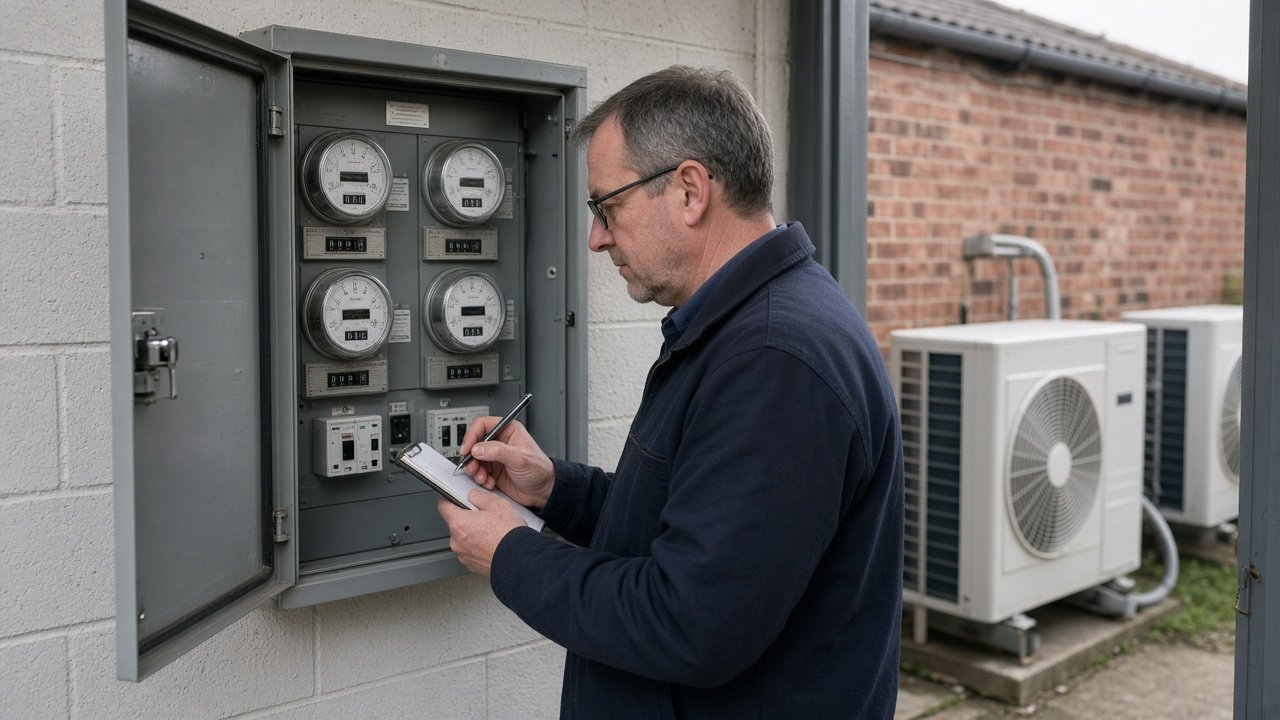
Suppose a small commercial split draws around 1.5–2.5 kW electrical input while cooling hard on a hot day (actual input depends on capacity and conditions). At an illustrative tariff of 28–40p/kWh, that is roughly £0.40–£1.00 per hour of heavy cooling for that one system. A larger VRF outdoor unit serving multiple zones might draw several kW to tens of kW when loaded, so hourly cost scales accordingly.
Annual cost is dominated by how many hours you spend in that territory. A retail unit cooling all trading hours through a warm summer will land in a different place from a well-scheduled office with night setback.
Better than guessing: submeter the outdoor units, or use BMS energy reports if you have them. Spot checks with a clamp meter during peak cooling also beat brochure maths.
| Lever | Typical effect on kWh | Speed to implement |
|---|---|---|
| Schedules / setback | Often large | Fast |
| Filter/coil clean + charge | Medium | Fast (service visit) |
| Avoid heat/cool fight | Medium–large | Fast |
| Higher SEER/SCOP kit | Large over years | CapEx / project |
| Submetering | Enables targeting | Medium |
Illustrative only — measure your own site before prioritising spend.
SEER and SCOP without the brochure fog
When people talk about commercial AC energy efficiency, two seasonal ratings appear constantly:
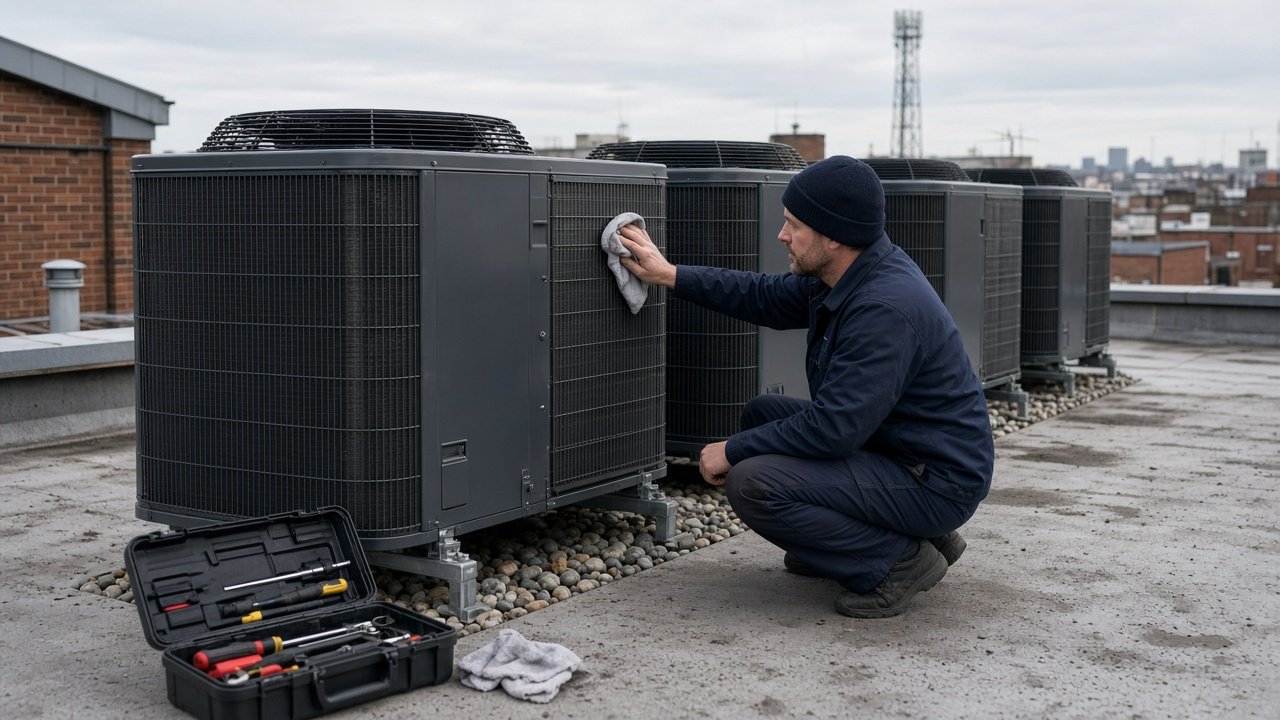
- SEER (Seasonal Energy Efficiency Ratio) — a seasonal indication of cooling efficiency
- SCOP (Seasonal Coefficient of Performance) — the heating-side seasonal indication for reverse-cycle systems
Higher seasonal figures generally mean less electricity for the same useful heating or cooling under the standard test assumptions. They are useful for comparing modern equipment. They are not a guarantee of your bill, because:
- Installation quality and pipework design matter
- Dirty filters ignore lab ratings
- Wrong setpoints and schedules waste efficient kit
- Real weather and occupancy differ from test profiles
When comparing quotes, ask for seasonal ratings and for a plain explanation of controls, zoning and maintenance assumptions. A high-SEER system left on overnight in empty meeting rooms will still burn money.
Maintenance: the unglamorous efficiency lever
You can buy efficient kit and still waste energy if nobody looks after it.
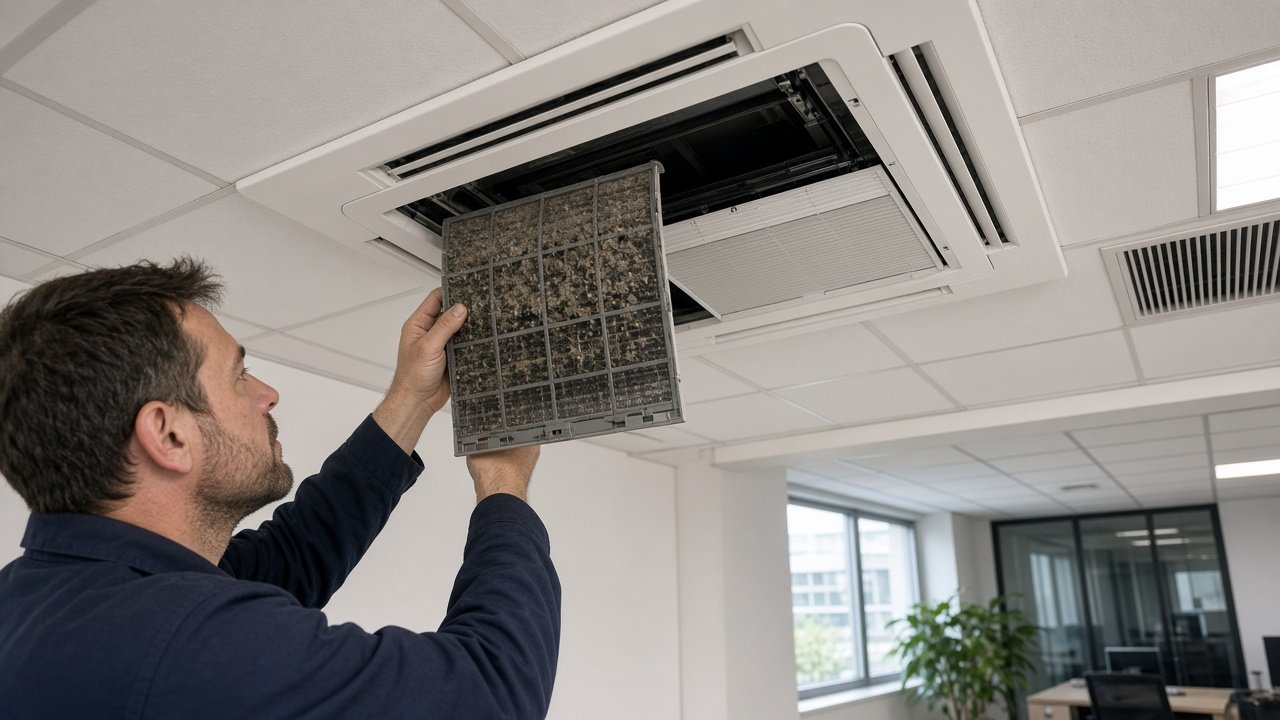
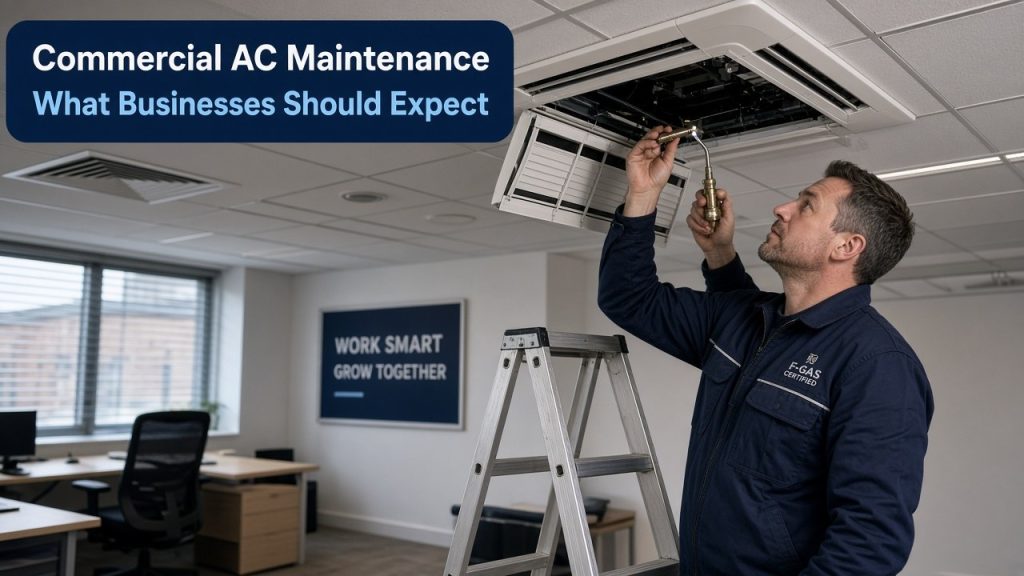
Maintenance that protects efficiency typically includes:
- Filter cleaning or replacement at sensible intervals
- Checking indoor and outdoor coils are not blanketed in dust or greasy film
- Verifying fans and motors are healthy
- Confirming refrigerant charge after any leak repair (F-Gas certified work)
- Checking drains and condensate pumps so the system does not fault and restart awkwardly
- Reviewing error logs and short-cycling behaviour
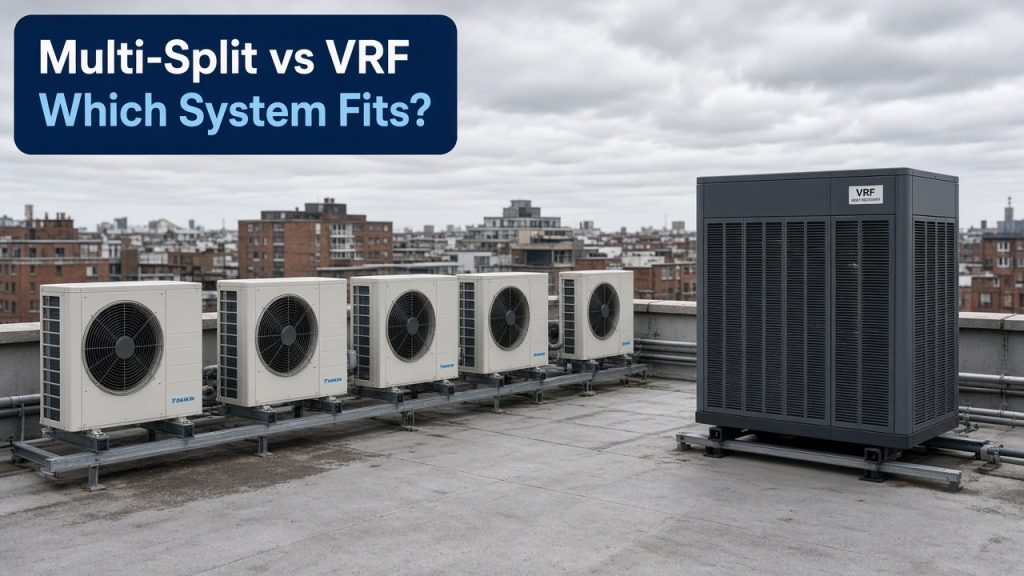
A neglected condenser on a flat roof is a classic bill-inflator. The compressor works against poor heat rejection, capacity falls, and the system runs longer. Occupants then push setpoints colder “because it’s not working,” which makes things worse.
Planned maintenance is not just about avoiding mid-summer breakdowns. It is one of the most reliable ways to reduce commercial AC energy use on the plant you already own.
Keep F-Gas records and service sheets together. If you are also in scope for TM44 air conditioning inspections (combined effective rated output more than 12kW in England and Wales), the energy assessor’s recommendations often echo the same themes: controls, maintenance and oversized or ageing plant. Acting on those points can cut running costs even though the inspection itself is a compliance duty.
Controls and setpoints: often the fastest win
Before you replace outdoor units, interrogate how the building is being asked to behave.
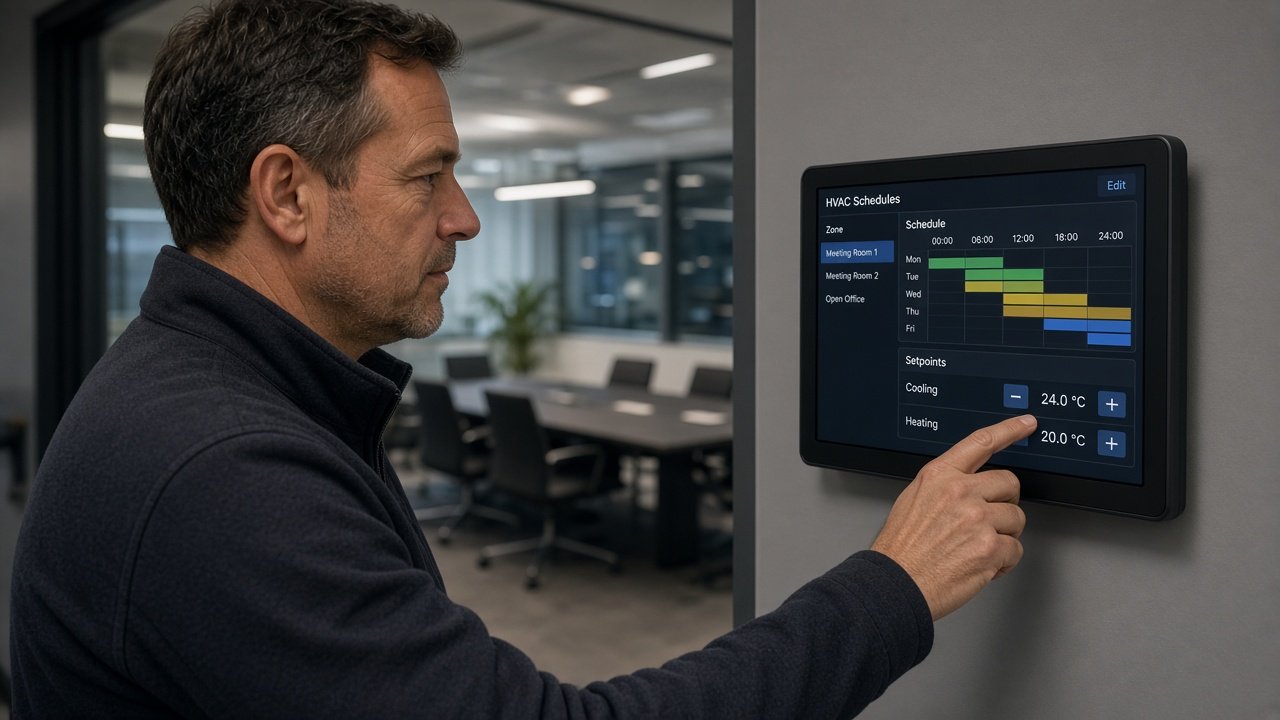
Practical control checks:
- Schedules — Does cooling match occupancy, or does it run for empty floors?
- Setpoints — Are offices chasing 19°C in summer when 23–24°C would be fine for most sedentary work?
- Deadbands — Is there a sensible gap between heating and cooling setpoints so both cannot fight?
- Zoning — Are south-facing glazed areas dragging the whole floor into over-cooling?
- Sensors — Is the thermostat on a sunlit wall or above a photocopier?
- Local overrides — Do desktop controllers get left on full cold after one hot afternoon?
- Fresh air and doors — Are loading bay doors open while AC hammers away next door?
BMS tweaks and staff guidance are not glamorous CapEx. They are often the cheapest kWh you can save this quarter.
For reverse-cycle heat pumps, winter setpoints and weather compensation matter just as much. Overheating empty spaces overnight is a quiet budget leak.
When inefficient kit costs more than a planned upgrade
There is a point where loyalty to old plant becomes expensive.
Warning signs:
- Rising call-outs for the same systems
- Comfort complaints even after services
- Restricted or costly refrigerant after a leak
- Outdoor units that sound laboured and short-cycle in mild weather
- Meter data showing AC use out of line with similar buildings or floors
- Controls that cannot zone or schedule properly without constant manual babysitting
A planned upgrade with trusted installers can reduce commercial air conditioning running costs through better seasonal efficiency, inverter turndown at part load, tighter zoning and modern controls. It can also reduce reactive maintenance spend.
That does not mean every ageing cassette must be ripped out tomorrow. It means you should compare:
- Expected repair and refrigerant trajectory over the next 3–5 years
- Illustrative energy difference from higher seasonal efficiency and better controls
- Comfort and productivity impact
- Any compliance drivers (F-Gas, TM44 recommendations, noise, landlord standards)
Ask for options, not a single scare quote. Sometimes the best answer is a phased replacement of the worst offenders plus control fixes elsewhere.
How Commercial AC Installation can help
Commercial AC Installation can help you arrange support with trusted installers who look at energy use in the real world: controls, maintenance condition and whether replacement stacks up. We do not claim to personally install every system; we help you get competent eyes on the building and clear next steps.
That can include:
- Reviewing where energy is likely being wasted
- Advising on control and maintenance quick wins to reduce commercial AC energy use
- Comparing repair-and-maintain versus planned upgrade paths
- Helping you request a quote with transparent assumptions
- Booking a free site survey so recommendations fit your hours of use and layout
Bring tariff information and any BMS or meter exports if you have them. The more site-specific the data, the less anyone needs to lean on generic £/hour claims.
When you are ready to put numbers on options, contact Commercial AC Installation to arrange support — request a quote or a free site survey and treat running costs as an operations issue, not just a shock on the invoice.
What drives commercial air conditioning running costs?
Electricity use is driven mainly by how hard and how long the compressors and fans run. Building heat gains, setpoints, schedules, outdoor temperature, system efficiency (SEER/SCOP), maintenance condition and control quality all matter. Poorly commissioned or oversized plant can cost more than a well-controlled smaller system.
What are SEER and SCOP in simple terms?
SEER (Seasonal Energy Efficiency Ratio) indicates cooling efficiency across a representative season. SCOP (Seasonal Coefficient of Performance) does a similar job for heating on reverse-cycle systems. Higher seasonal ratings generally mean less electricity for the same useful heating or cooling, though real-world results still depend on installation, controls and maintenance.
How does maintenance reduce commercial AC energy use?
Clean filters and coils, correct refrigerant charge, working fans and sensible control settings keep systems closer to design efficiency. Neglected plant often runs longer to achieve the same comfort, which shows up on the meter. Planned maintenance is usually cheaper than the combined cost of breakdowns and wasted kWh.
Can better controls cut commercial AC energy use quickly?
Yes. Correct setpoints, avoiding simultaneous heating and cooling, using schedules that match occupancy, and enabling features such as setback or deadbands often deliver noticeable savings without replacing outdoor units. Many buildings waste energy on empty rooms cooled all weekend.
When does inefficient kit cost more than a planned upgrade?
When repair frequency rises, refrigerants become hard to source, comfort complaints continue despite servicing, and metered use stays high relative to similar spaces. At that point, continuing to patch old plant can cost more over a few seasons than a higher-efficiency replacement with proper controls — but you need site-specific figures, not generic promises.
How can Commercial AC Installation help with running costs?
Commercial AC Installation can arrange support with trusted installers to review efficiency, controls and upgrade options. Request a quote or a free site survey for a practical view of where energy is being wasted and what a proportionate improvement plan could look like.