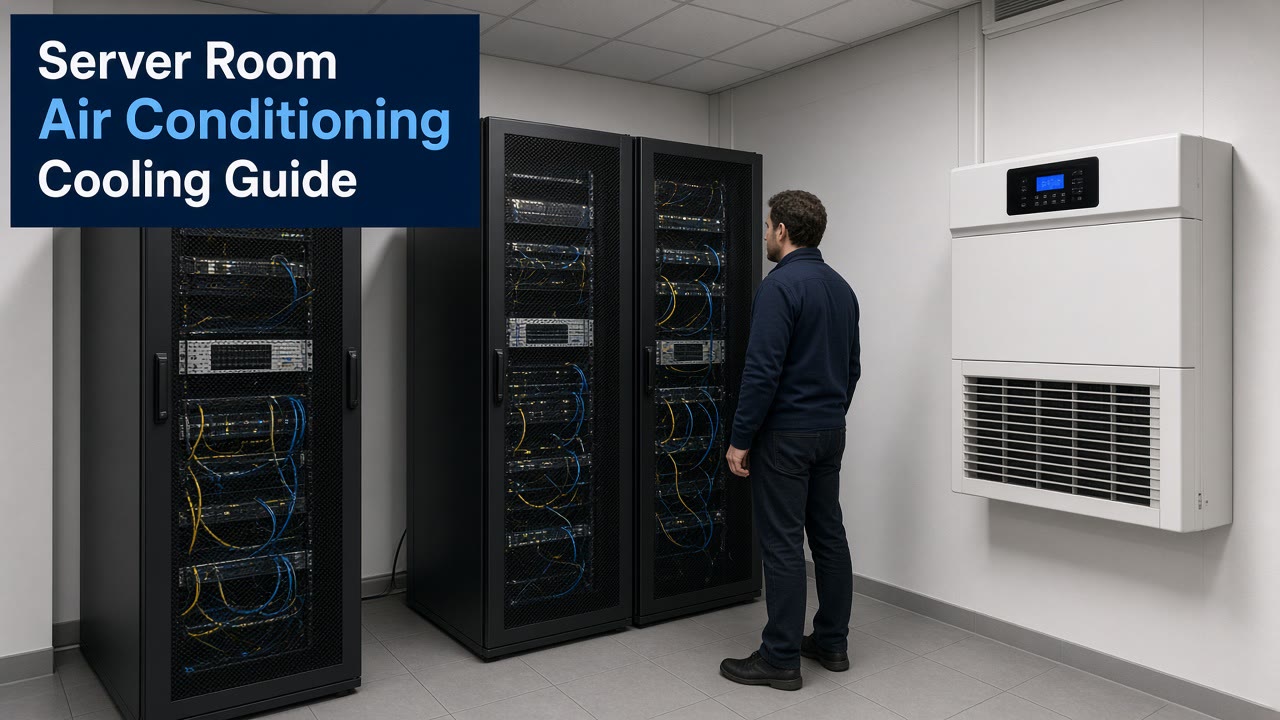
A server room does not care that the rest of the office feels fine. IT kit sheds heat constantly, and when server room air conditioning cannot keep up, you get thermal throttling, unexpected shutdowns and expensive recovery work. Comfort cooling that works for desks is rarely the right tool for racks.
This guide explains why standard AC falls short, how heat loads drive design, where redundancy matters, how close control compares with splits, what monitoring should look like, and what a proper survey checks. We will also cover how Commercial AC Installation can help you arrange support with trusted installers — without pretending one product fits every cupboard and every data hall.
Why comfort AC is not enough
Office air conditioning is built around people: intermittent occupancy, lower heat density, and a bit of forgiveness if the temperature drifts a degree or two. Server and comms room air conditioning faces continuous high heat density, mostly sensible (dry) heat, 24/7 runtime, hotspot risk, and the need for alarms when something drifts overnight.
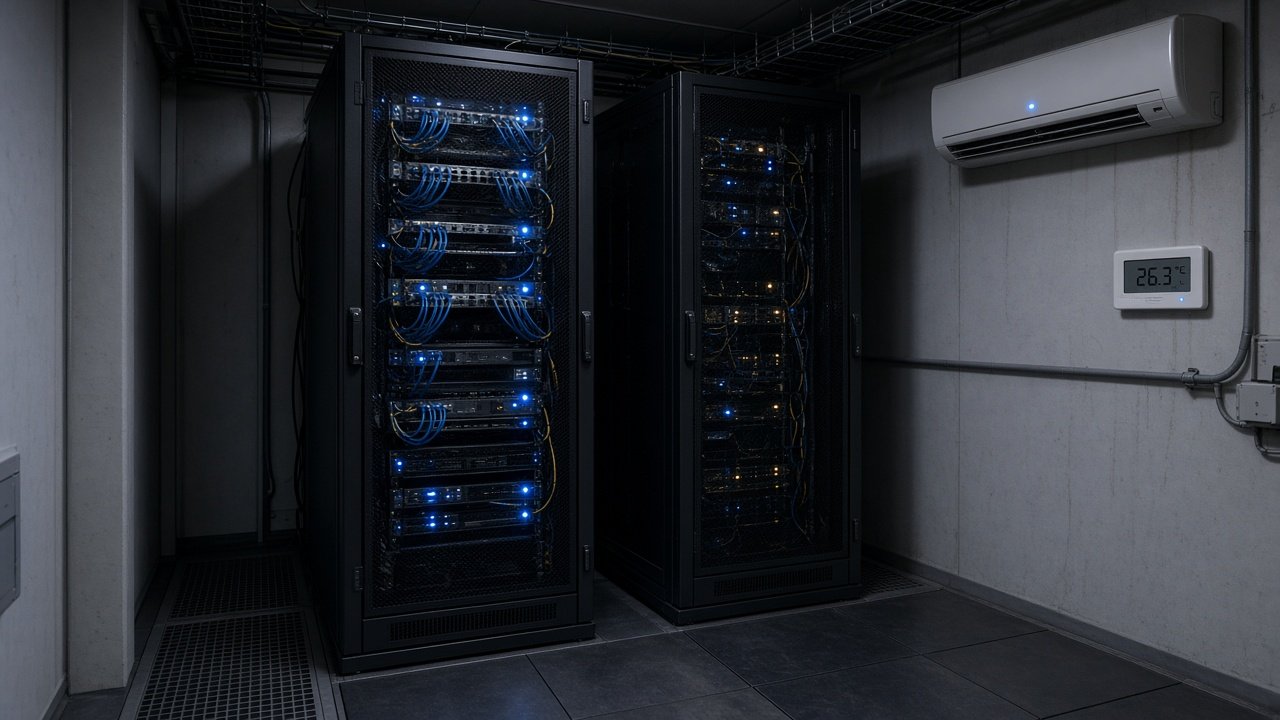
If your “server room” is really a converted cupboard with one network switch, a carefully specified split and a temperature alarm may be proportionate. Once you have multiple racks, UPS heat and no tolerance for downtime, design properly.
Understanding heat loads (without the physics lecture)
Cooling capacity must match the heat the room produces — plus a sensible margin for growth and dirty filters.
Main contributors:
- IT equipment nameplate or measured power draw (the heat ultimately ends up in the air)
- UPS and PDU losses
- Lighting
- People briefly working in the room
- Heat gain through walls, ceilings and glazing from adjacent spaces or outdoors
- Fresh air or infiltration that brings warm air in
A common mistake is sizing from floor area alone. Two rooms of the same size can have wildly different loads depending on rack density. Another mistake is ignoring future installs — the next blade chassis arrives six months later and the cooling that “was fine” suddenly is not.
Ask for heat load to be estimated from actual IT power where possible, not a vague office rule of thumb. If meters are available on the UPS output, use them. If not, inventory the kit and apply realistic diversity rather than assuming every nameplate watt runs flat out forever — but do not under-size aggressively just to save CapEx.
Redundancy: planning for the day a unit fails
Server room cooling fails at the worst moment: summer afternoon, engineer on another job, change window already booked for tomorrow.
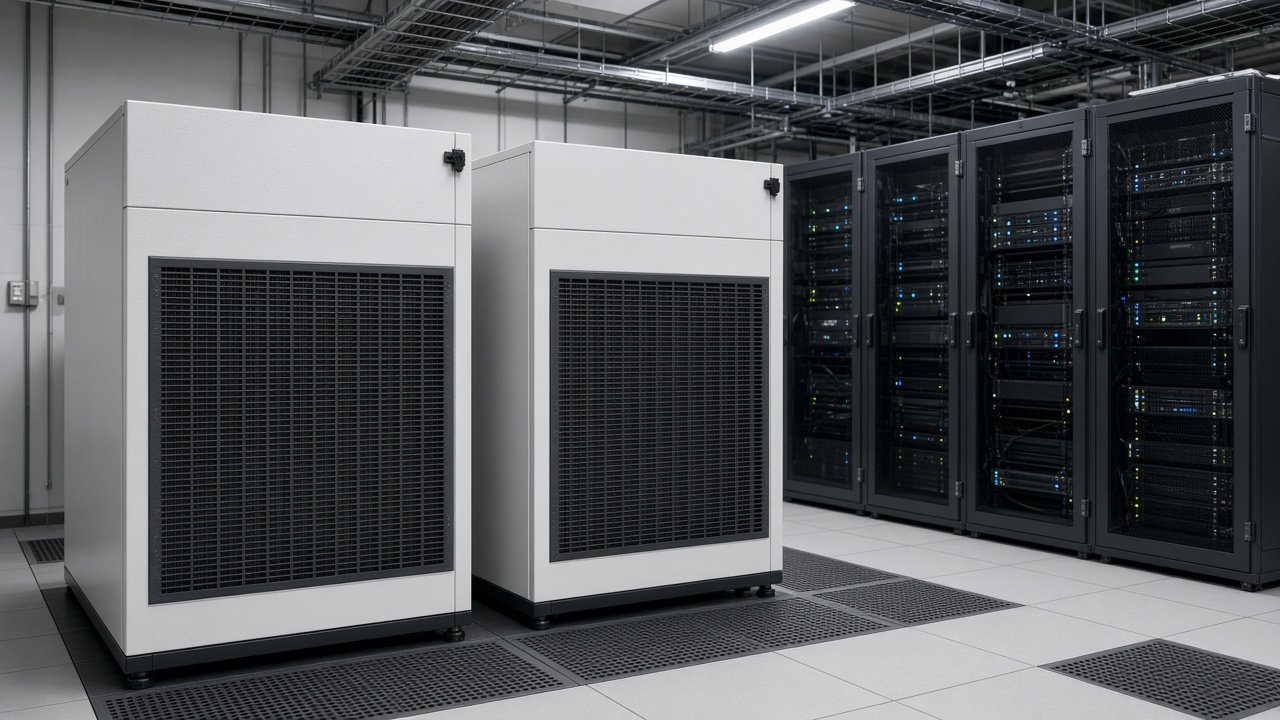
Redundancy is how you survive that.
Common approaches:
- N+1 — Enough capacity to carry the load with one unit offline
- N+2 or better — For higher criticality environments
- Duty / standby — One unit running, one ready, with automatic changeover
- Diverse outdoor locations — Where practical, so a single roof issue does not take out every condenser
Redundancy is not only about compressors. Think about:
- Power supplies and whether cooling shares a single breaker
- Controllers and network monitoring paths
- Condensate pumps (a flooded floor can force a shutdown even if cooling plant is healthy)
- Access for maintenance without turning the room into a sauna
Close control vs split systems
Close control cooling (precision air conditioning) is purpose-built for IT and technical spaces. Expect tighter control bands, designs aimed at high sensible loads, options for underfloor or directed airflow, and better integration with monitoring.
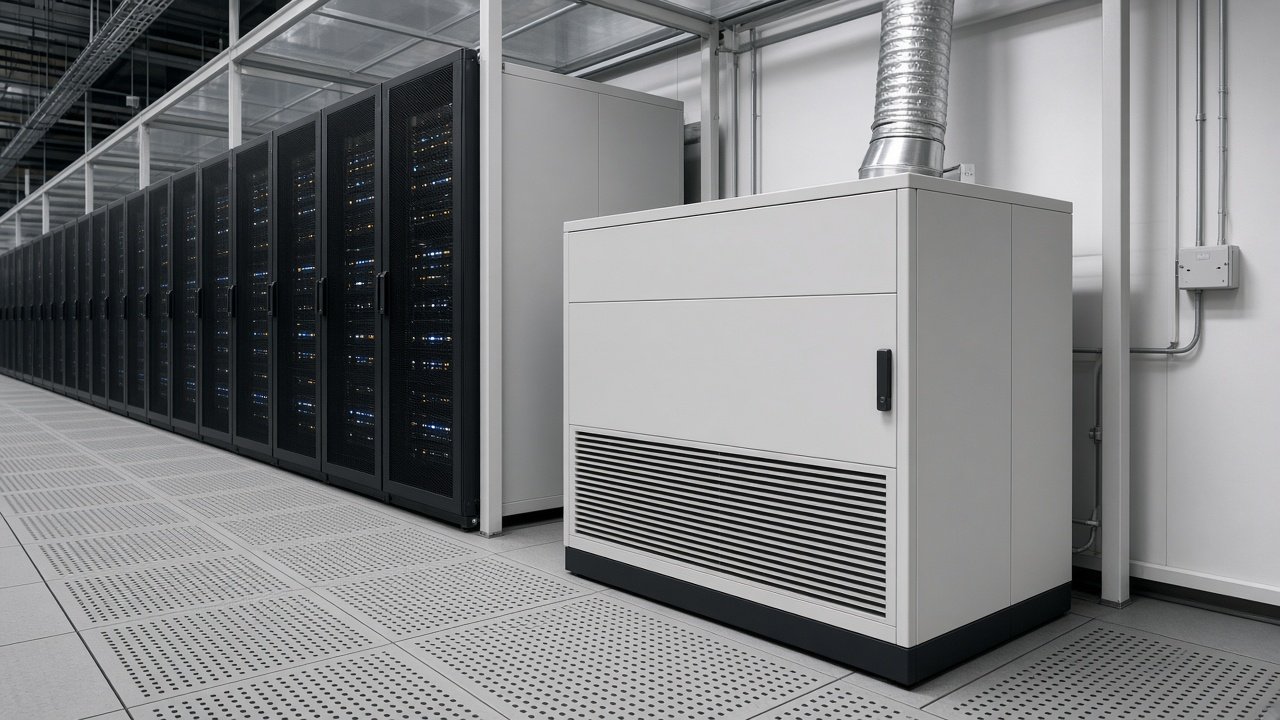
Split systems (including multi-splits) are cheaper and faster to deploy. They can work for small comms rooms when:
- Heat load is modest and well understood
- Continuous-duty capable kit is selected
- Airflow is planned so cold air reaches intakes
- Temperature (and ideally humidity) alarms are fitted
- Maintenance access is realistic
They struggle when loads climb, humidity control matters, or you need true redundancy and predictable performance under filter fouling and high ambient temperatures.
| Factor | Comfort split | Close control / precision |
|---|---|---|
| Heat density fit | Low–modest | Medium–high |
| Humidity options | Limited | Often stronger |
| 24/7 + alarms | Possible but limited | Designed for it |
| Redundancy (N+1) | Harder | Common |
| Best for | Small cupboards | Critical / denser rooms |
Illustrative comparison — survey heat load and uptime needs before choosing.
Airflow, layout and the boring details that decide success
Cooling capacity on a brochure does not guarantee cold servers.
Pay attention to:
- Hot aisle / cold aisle thinking even in small rooms — do not blast cold air straight into hot exhausts
- Cable management — bundles that block perforated tiles or rack intakes create local hotspots
- Door and sealing — a server room that is also a shortcut to the warehouse never stays stable
- Outdoor unit siting — adequate airflow, clean condensers, noise limits for neighbours, and protection from vandalism or blocked louvres
- Condensate — pumped drains need maintenance; gravity drains need fall; neither should empty somewhere that creates a slip or electrical hazard
- Fire and security interfaces — cooling design must respect fire strategy and access control, not fight them
Small rooms are unforgiving. A single poorly placed thermostat can convince the system everything is fine while the top-U in the rack cooks.
Monitoring: know about problems before users do
If nobody knows the room hit 35°C overnight, you do not have a cooling strategy — you have luck.
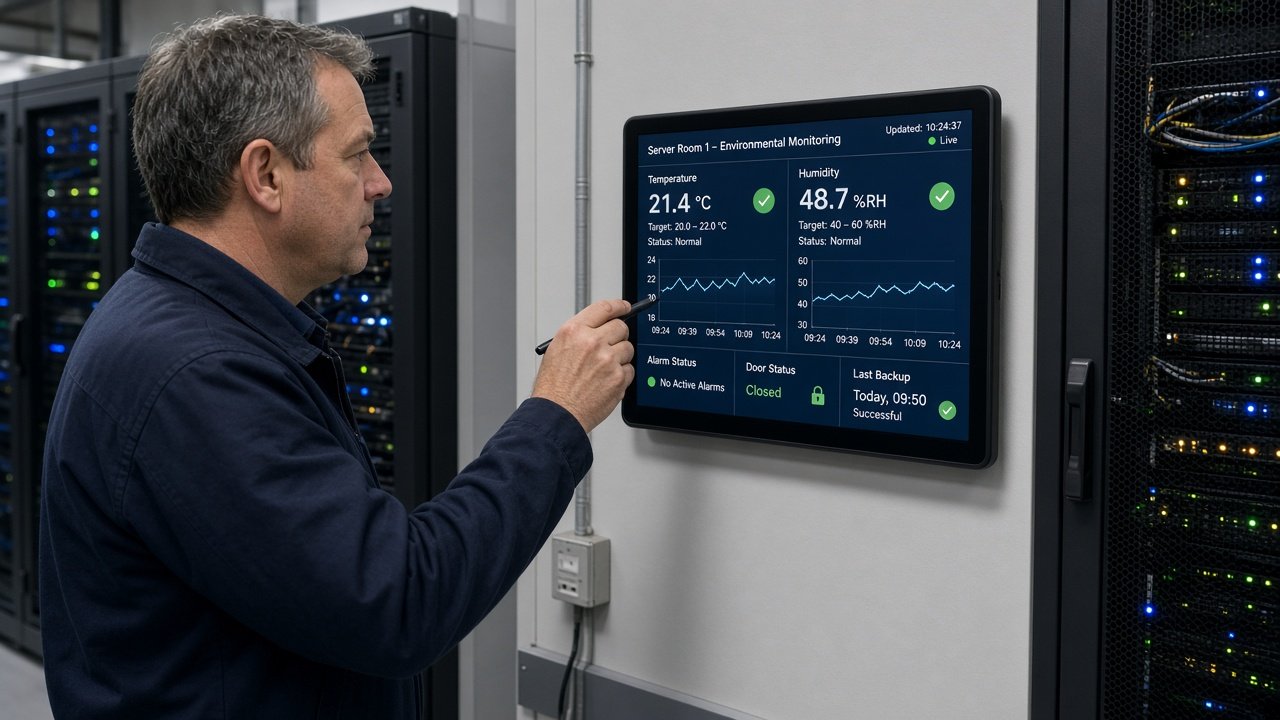
Useful monitoring includes:
- Room temperature (and humidity where relevant) with high/low alarms
- Alarms from the cooling units themselves (sensor faults, high pressure, condensate alarms)
- Optional rack inlet sensors on the hottest or most critical cabinets
- Alerting to people who actually respond — not an inbox nobody reads
- Basic logging so you can see drift over weeks, not just the moment of failure
Tie monitoring into your wider facilities or IT alerting if you can. A flashing LED in a locked cupboard helps no one at 2am.
What a proper survey checks
When you book a free site survey through Commercial AC Installation, the useful outcome is clarity, not a one-line “you need 5kW” guess.
A solid survey for server room air conditioning typically reviews:
- Current and planned IT heat load
- Room dimensions, fabric and adjacent heat gains
- Existing cooling type, capacity, age, refrigerant and condition
- Airflow paths, hotspots and thermostat locations
- Electrical capacity and isolation for new or additional plant
- Outdoor unit positions, structural and noise constraints
- Drainage routes and leak risk
- Redundancy options versus business uptime needs
- Monitoring and emergency response expectations
- Maintenance access and service clearances
Bring an IT contact to the conversation if possible. Facilities see the plant; IT knows which racks cannot go down and what is landing next quarter.
How Commercial AC Installation can help arrange support
Commercial AC Installation can help you arrange support with trusted installers who understand server and comms environments. We do not claim to personally install every system ourselves; we focus on getting the right expertise in front of your room, your load and your uptime requirements.
That support can include:
- Matching small comms room air conditioning needs to proportionate split solutions with monitoring
- Specifying close control cooling where precision and resilience justify it
- Planning N+1 or duty/standby arrangements
- Helping you request a quote with clear assumptions on load and redundancy
- Organising a free site survey so recommendations are based on the actual room, not a catalogue page
If you already had an emergency portable unit wheeled in last summer, use the calm months to fix the root design. Crisis buying is how rooms end up with mismatched kit and no documentation.
Good server room air conditioning is quiet insurance. Get the load right, design for failure, monitor the space and maintain the plant. Contact Commercial AC Installation to arrange support, request a quote, or book a free site survey for your server or comms room.
Why is comfort air conditioning not enough for a server room?
Comfort AC is designed for people, not continuous high heat density from IT kit. Server rooms need steadier temperatures, better humidity control in many cases, higher sensible cooling ratios and often 24/7 operation with alarms. A wall-mounted split that ‘feels cool enough’ can still leave hotspots that shorten equipment life or trigger thermal shutdowns.
What is close control cooling?
Close control (precision) air conditioning is designed for data and comms environments. It typically offers tighter temperature control, high sensible cooling capacity and options for humidity management, airflow patterns and monitoring. It is usually a better fit than standard comfort splits once heat loads and uptime expectations rise.
Do I need redundancy in server room cooling?
If downtime is expensive or unacceptable, yes. Common approaches include N+1 (one spare unit above the design load) so cooling continues when a unit is offline for service or failure. The right level depends on how critical the room is, how fast you can get emergency support, and whether you have temporary cooling options.
What does a server room cooling survey check?
A proper survey looks at IT heat load, room volume and fabric, airflow paths, existing plant capacity and age, power availability, condensate routes, outdoor unit siting, noise limits, monitoring needs and access for maintenance. It should also discuss redundancy and future growth rather than only matching today’s rack count.
Is a comms room the same as a server room for cooling?
The principles are similar — concentrated heat, often continuous operation — but scale differs. Small comms cupboards may manage with carefully specified splits and monitoring, while denser server rooms more often need close control, structured airflow and redundancy. Treat both as critical spaces, not leftover corners for leftover AC.
How can Commercial AC Installation help with server room cooling?
Commercial AC Installation can arrange support with trusted installers experienced in server and comms room cooling. You can request a quote or book a free site survey so heat load, redundancy and monitoring options are assessed properly before you commit.