If you manage a commercial building with cooling, TM44 air conditioning inspection is one of those compliance jobs that quietly sits in the background until someone asks for the paperwork. It is not glamorous. It is also not optional once you cross the capacity threshold.
This is practical guidance for building owners and managers, not legal advice. Confirm duties on GOV.UK air conditioning inspections for your premises.
This guide walks through what TM44 actually is, who needs it, how the 12kW combined rule works, how often inspections are due, what lands in the report, and how TM44 differs from F-Gas. We will also cover heat pumps that cool — a common grey area — and how Commercial AC Installation can help you arrange support without the jargon overload. This piece focuses on England and Wales per GOV.UK; Scotland and Northern Ireland have separate frameworks.
What is a TM44 air conditioning inspection?
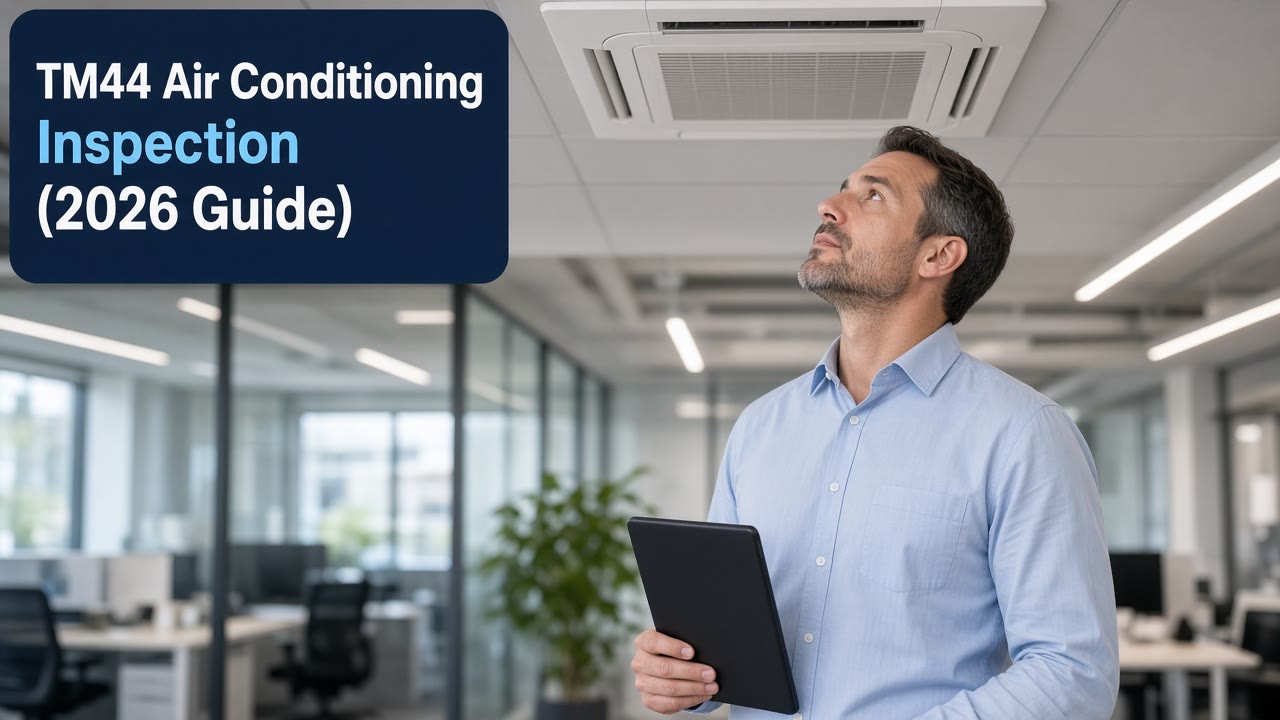
TM44 is the CIBSE methodology used for inspecting air conditioning systems so buildings meet the Energy Performance of Buildings Regulations (EPBR) in England and Wales. In plain English: an accredited energy assessor looks at how your non-domestic cooling is set up and how efficiently it is likely to be running, then lodges an air conditioning inspection report on the national register.
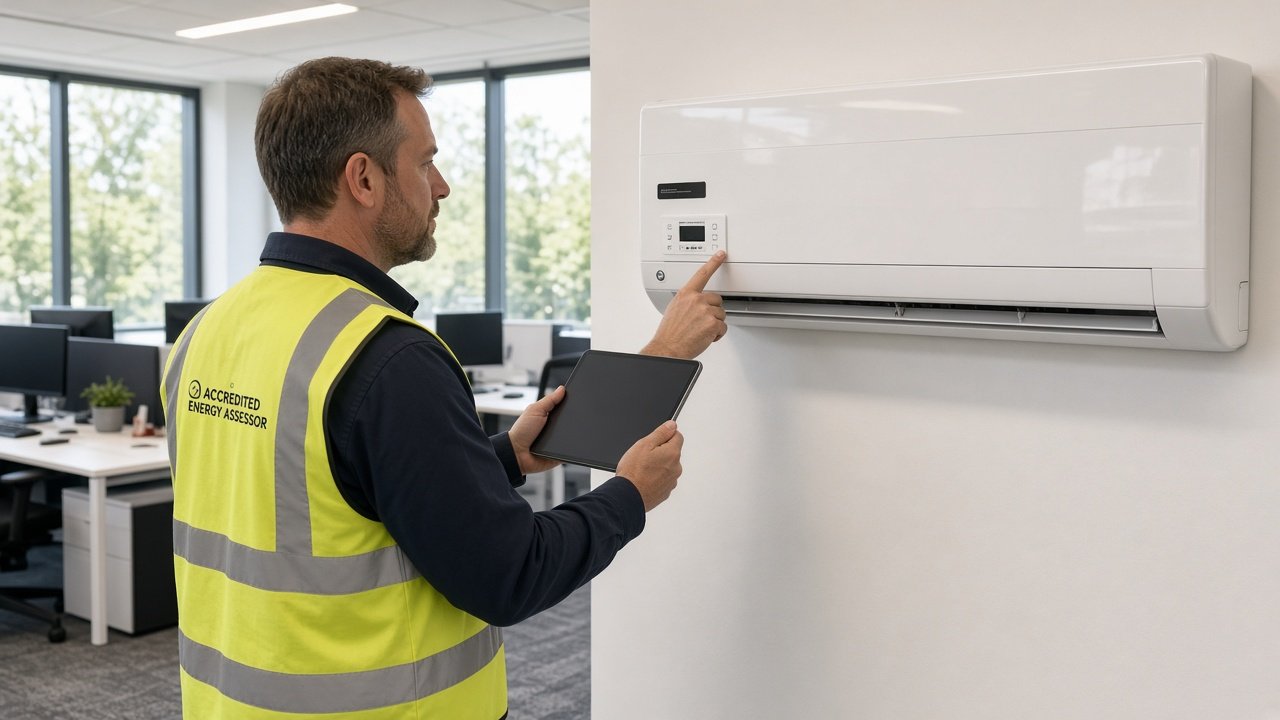
The point of the exercise is energy and carbon. The assessor is there to flag inefficiency, poor controls, maintenance gaps and oversized or ageing plant — not to strip condensers or top up refrigerant as part of the inspection itself.
Who needs a TM44 inspection?
You need a TM44 inspection when the air conditioning systems under your control have a combined effective rated output of more than 12kW.
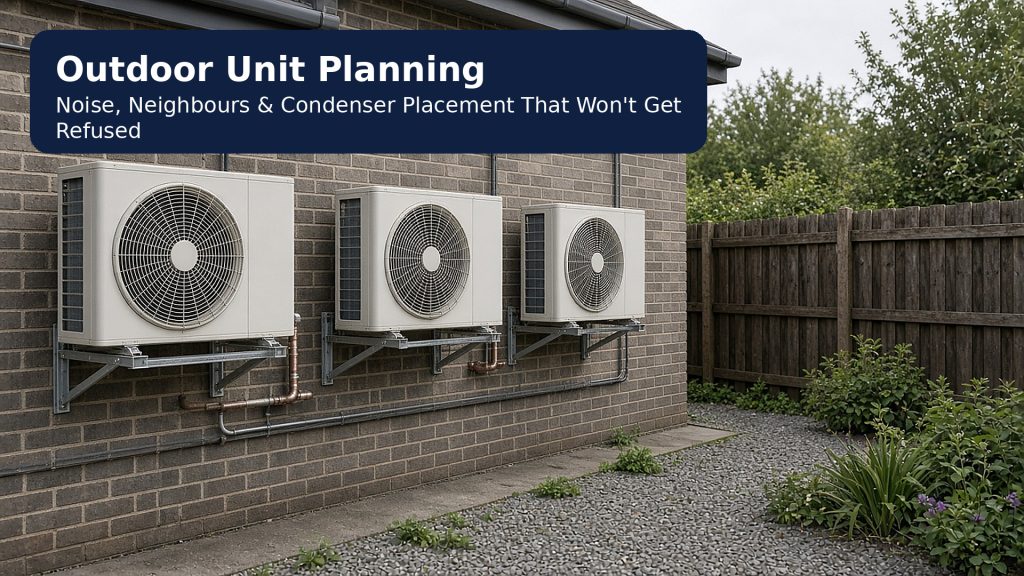
That “combined” word is doing a lot of work. Facilities teams get caught out by it all the time. Three wall-mounted units at 5kW each look harmless on paper. Together they are 15kW. If they sit under single control in the same building, you are usually in scope.
GOV.UK is clear that systems made up of individual units below 12kW still count when their combined effective rated output is more than 12kW. One or more units controlled by a single person are treated as a single system for the regulations.
Who is responsible? The person who controls the technical operation of the system — typically the building owner or manager. Adjusting a thermostat does not make you the “controller”. A full repairing and insuring lease often puts the duty on the occupier. Where facilities management contracts say the FM firm will arrange inspections, landlords and occupiers can still retain a parallel duty to make sure it actually happens. Read the contract carefully rather than assuming someone else has it covered.
If control of the system passes to someone else and they do not receive the existing report, a fresh inspection is generally required within three months of takeover. That handover detail gets missed during lease changes more often than it should.
The 12kW combined rule — the classic trap
TM44 12kW is not “any single unit over 12kW”. It is the combined effective rated output of the systems you control.
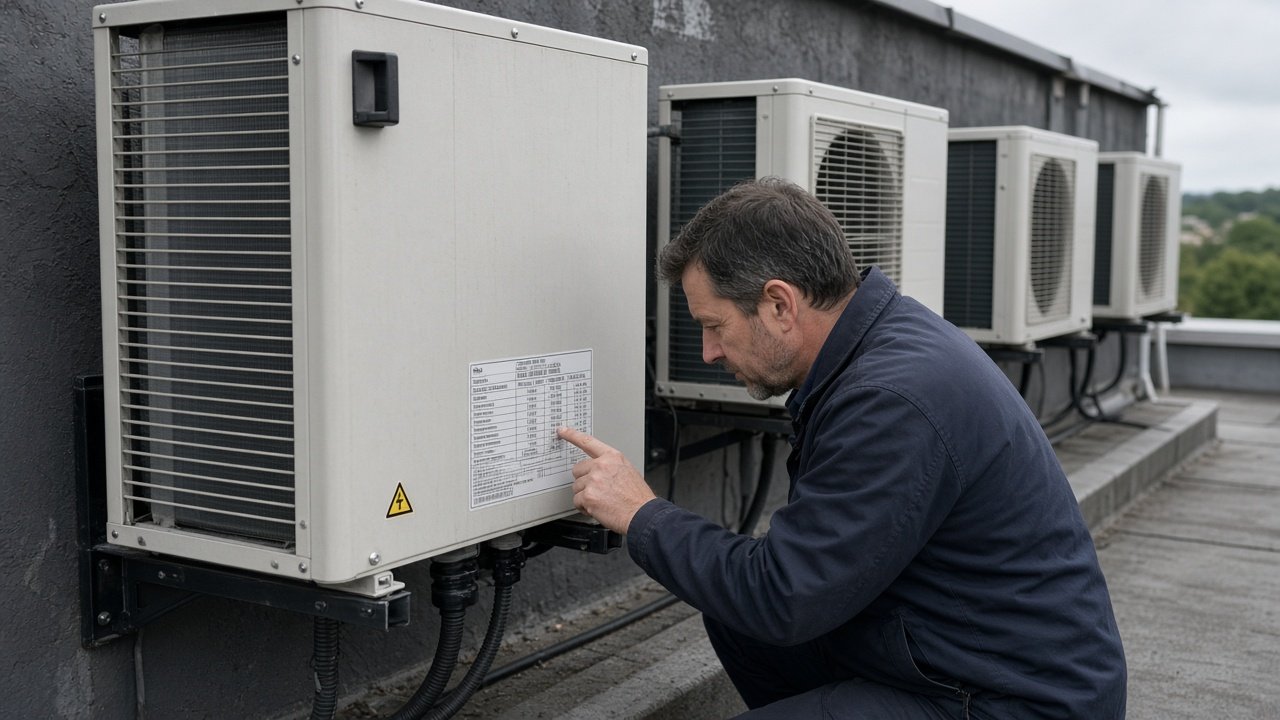
Effective rated output means the manufacturer’s maximum continuous cooling output in kW while meeting the stated efficiency. You will usually find it on the rating plate, in O&M manuals, on the manufacturer’s site, or in maintenance records.
Do not count only the biggest unit, confuse heating kW with cooling output, or assume tenant splits never count. If paperwork is patchy, get the kit list aggregated properly before you decide you are out of scope. Approximate rules of thumb on GOV.UK (for example, roughly 200m² of typical office space per 12kW) are only indicative. Dense IT floors, meeting rooms and display-heavy retail can cross the line on much smaller floor areas.
How often do you need a TM44 inspection?
Inspections must be no more than five years apart.
For systems first put into service on or after 1 January 2008, the first inspection should have taken place within five years of that in-service date. Older transitional deadlines for larger systems have long since passed for most buildings; if you still do not have a valid report, treat that as overdue rather than hunting for historic cut-off dates.
There is no helpful government reminder service. The five-year clock runs from the inspection date on your current report. Diary the renewal early enough that access, plant information and assessor availability do not push you past the deadline.
Keep the latest air conditioning inspection report with your building log book or O&M pack. You must pass it to anyone taking over control of the system. Buyers’ and tenants’ solicitors increasingly ask for it during transactions, so missing paperwork can slow a sale or letting even before enforcement enters the picture.
What is in a TM44 air conditioning inspection report?
A valid report (from April 2012 onwards) must be lodged on the Energy Performance of Buildings Register and carry a reference number. Only reports produced by accredited energy assessors who are members of a government-approved scheme count. Expect commentary on likely efficiency, faults, maintenance, controls, sizing versus cooling load, and key recommendations, plus assessor and building details.
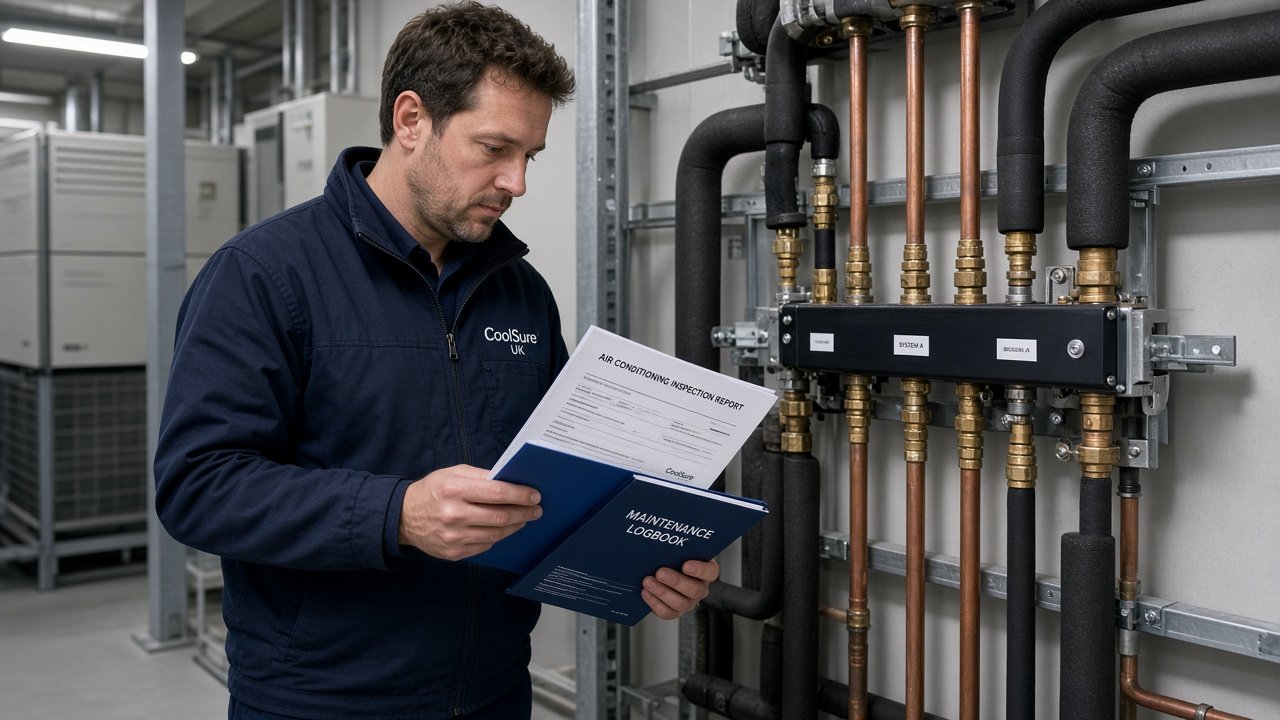
Importantly, there is no legal duty to implement every recommendation. The legal duty is to have the inspection done on time and to keep (and hand over) the report. That said, ignoring cheap wins — wrong setpoints, heating and cooling fighting each other, clogged heat rejection, timed systems running overnight — usually costs more in electricity than the inspection itself.
The assessor is not there to clean filters or reprogramme the BMS mid-visit as part of the statutory inspection. Physical fixes need a separate arrangement with competent engineers.
TM44 vs F-Gas — do not mix them up
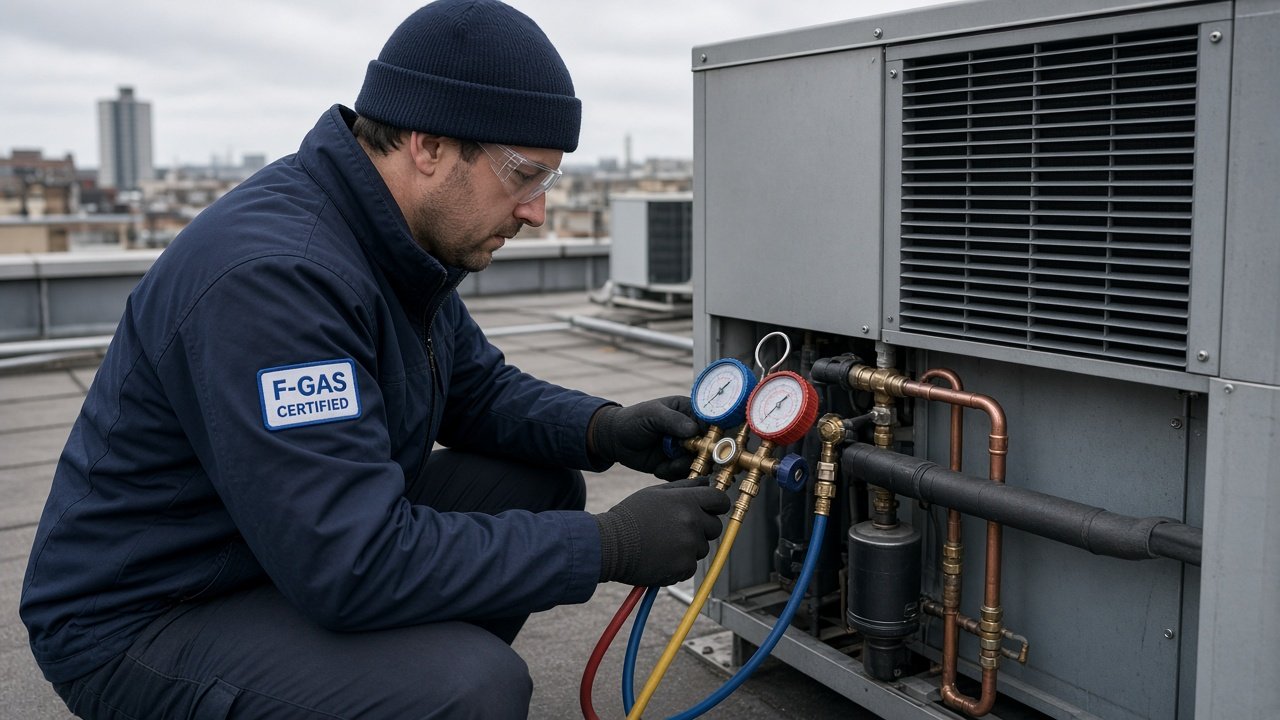
This is one of the most common mix-ups on commercial sites. TM44 is an energy inspection by an accredited assessor at least every five years once you are over 12kW combined. F-Gas duties cover refrigerant containment, leak checks, certified engineers and records on a different schedule.
GOV.UK guidance explicitly notes that F-Gas inspection and maintenance requirements sit outside the EPB Regulations remit. Doing your TM44 does not tick the F-Gas box, and a clean F-Gas logbook does not replace a TM44 report.
If someone offers a “combined certificate” that is not a properly lodged air conditioning inspection report from an accredited assessor, dig into what you are actually buying.
| Topic | TM44 inspection | F-Gas duties |
|---|---|---|
| Energy focus | Yes — EPBR energy assessment | No — refrigerant compliance |
| Combined 12kW cooling rule | Yes | Different thresholds for leak checks |
| Typical cycle | Up to 5 years | Leak-check intervals by charge/GWP |
| Who | Accredited energy assessor | F-Gas certified company/engineer |
Illustrative comparison — confirm current duties on GOV.UK.
Do heat pumps that cool count?
Often, yes.
An “air conditioning system” under the regulations is broadly a combination of components that treat air so temperature is controlled or can be lowered. Systems that also handle ventilation, humidity or cleanliness still fall under that definition when refrigeration is used for cooling.
So a reverse-cycle heat pump or VRF system that provides cooling can contribute to the combined effective rated output. Dedicated process cooling (think cold stores or pharma process plant) sits in a slightly different practical guidance space, but there is no neat exemption that lets you ignore comfort cooling just because the outdoor unit also heats in winter.
If your building is heated and cooled by heat pumps, do not assume “heat pump = no TM44”. Check cooling capacity, who controls the plant, and whether the combined output crosses 12kW. When in doubt, verify against current GOV.UK guidance rather than a sales brochure.
Enforcement and penalties — keep it factual
Local Weights and Measures Authorities (usually Trading Standards) enforce air conditioning inspection duties in England and Wales. They can request your report and, if you fail to commission, keep or provide one when required, penalties can apply.
Rather than relying on second-hand fine figures that circulate online, check the current position on GOV.UK’s air conditioning inspections guide. Enforcement practice can include penalty charge notices, and failure to produce a report when asked can attract further action. Separately, missing reports create friction on sale or letting because conveyancers expect to see them.
Compliance is cheaper than arguing about it after the letter arrives.
How Commercial AC Installation can help arrange support
Commercial AC Installation does not claim to be the body that physically inspects or installs your plant on site. What we do is help you arrange support with trusted installers and assessors so the compliance and engineering pieces join up sensibly.
That can include:
- Sense-checking whether your kit list looks likely to exceed the 12kW combined threshold
- Connecting you with accredited energy assessors for a TM44 inspection
- Linking recommendations in the report to practical maintenance or upgrade options via trusted installers
- Helping you request a quote or book a free site survey so someone competent can walk the building before you commit spend
If your report flags controls, filtration, heat rejection or ageing plant, that is often where a survey earns its keep — turning generic recommendations into a prioritised action list for your site.
If you need help making sense of capacity, reports or next actions, contact Commercial AC Installation to arrange support, request a quote, or book a free site survey. Get the inspection done on time, treat useful recommendations as cost-saving prompts, and keep the paperwork somewhere findable.
What is a TM44 air conditioning inspection?
A TM44 inspection is a statutory energy assessment of non-domestic air conditioning systems under the Energy Performance of Buildings Regulations in England and Wales. An accredited energy assessor reviews how efficiently your cooling plant is running and produces a report with recommendations. It is about energy performance, not a substitute for routine servicing or F-Gas leak checks.
Who needs a TM44 inspection and what is the 12kW rule?
If the combined effective rated output of the air conditioning systems you control is more than 12kW, an inspection is required. That includes several smaller units that individually sit under 12kW but add up above the threshold. The duty usually sits with the person who controls the technical operation of the system, often the building owner or the occupier on a full repairing lease.
How often is a TM44 inspection required?
Inspections must be no more than five years apart. For systems first put into service on or after 1 January 2008, the first inspection should take place within five years of that date. Keep the latest report and pass it on if someone else takes over control of the system.
Is a TM44 inspection the same as an F-Gas check?
No. TM44 is an energy efficiency inspection under EPBR. F-Gas rules cover refrigerant handling, leak checking, record keeping and engineer certification. You may need both. Completing one does not automatically satisfy the other.
Do heat pumps that cool count towards TM44?
Often yes, if they provide cooling as part of an air conditioning system and the combined effective rated output is more than 12kW. Heat pumps used only for heating without cooling capability are a different story. If you are unsure, check GOV.UK guidance or get the kit list reviewed before you assume you are out of scope.
How can Commercial AC Installation help with TM44?
Commercial AC Installation can arrange support with trusted installers and assessors so you can get clarity on whether you are in scope, book an inspection where needed, and act on practical recommendations. You can request a quote or a free site survey to start the conversation.