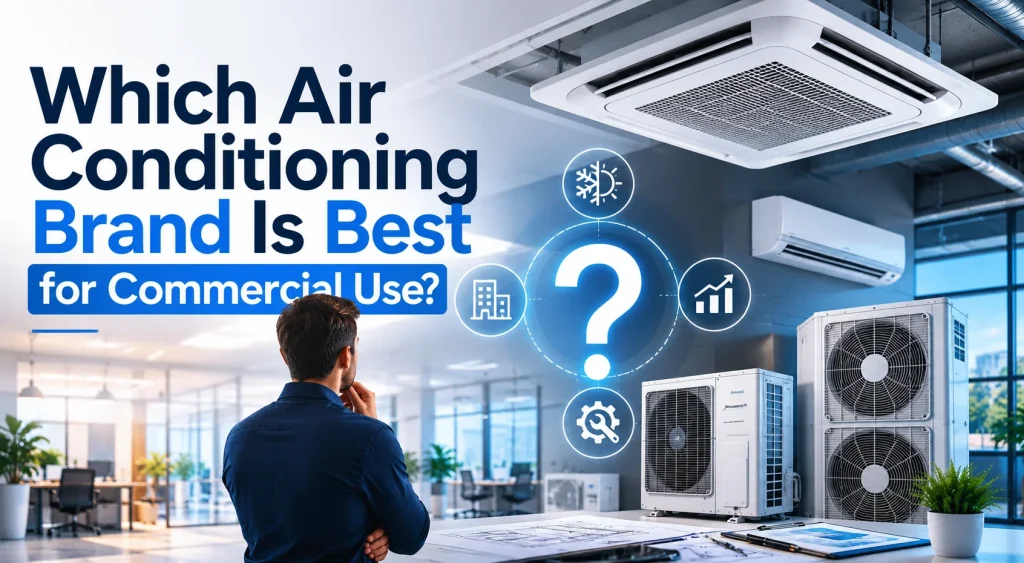
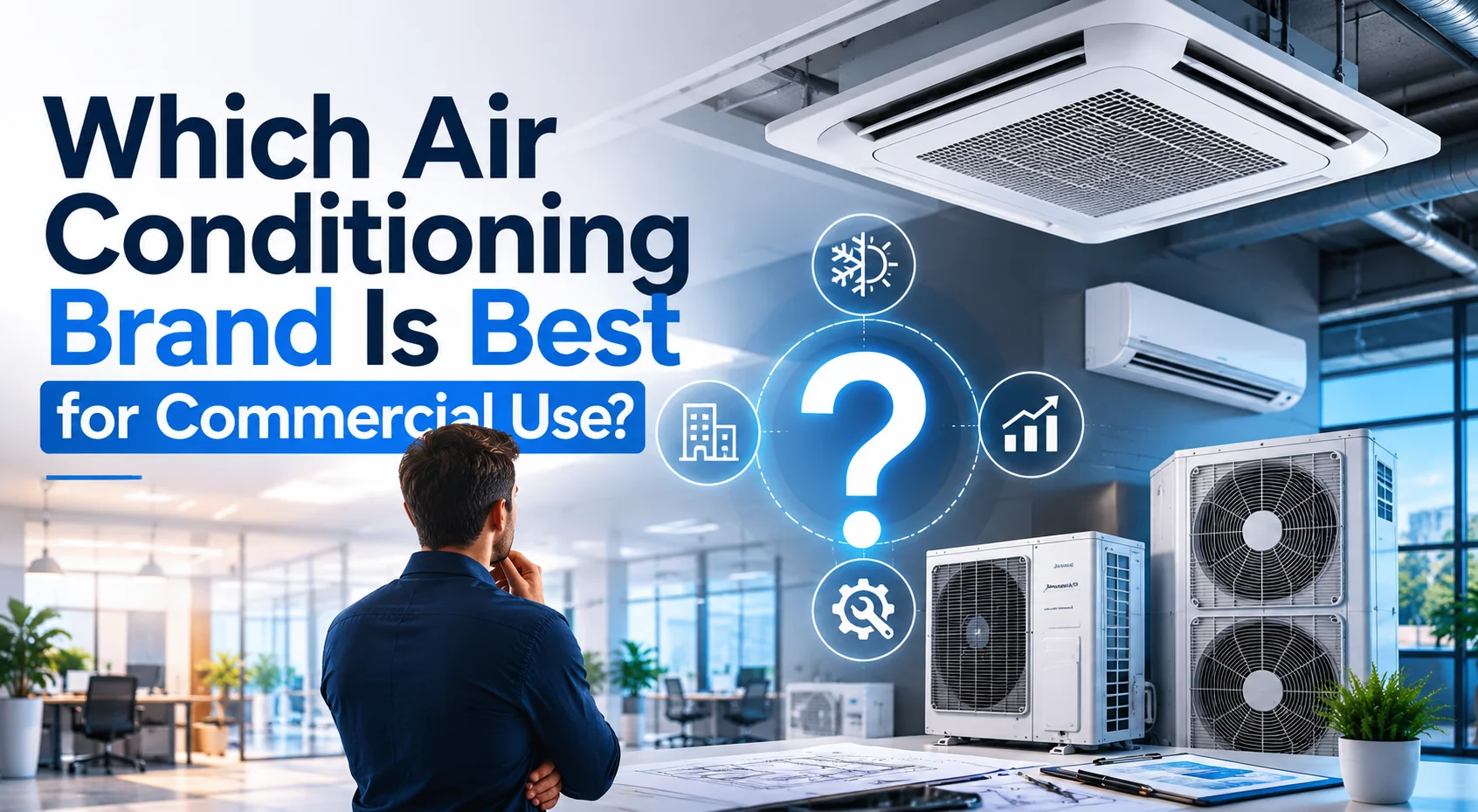
Which Air Conditioning Brand Is Best for Commercial Use?
Choosing the best air conditioning brand for commercial use is not as simple as picking the most famous name.
For any Commercial Air Conditioning Installation, the best brand usually depends on the building, the system design, the installer’s experience, the warranty position, the availability of parts and how the system will be serviced over time.
A small office may need a straightforward wall mounted or split system setup.
A hotel, school, clinic or large office may need a more flexible commercial AC system with several indoor units, zoning and better control.
A warehouse, plant room or server room may need a more carefully specified solution because heat load, airflow and usage patterns can be very different.
Brands such as Daikin, Mitsubishi Electric, Toshiba, Mitsubishi Heavy Industries, Panasonic, LG, Samsung and Fujitsu are commonly considered in commercial air conditioning discussions.
However, the best commercial air conditioning brand is usually the one that matches the premises properly and can be installed, commissioned, serviced and maintained by experienced engineers.
Why Brand Choice Matters Before Commercial Air Conditioning Installation
Brand choice matters because commercial air conditioning is a long-term building decision.
The system may need to run through hot weather, busy trading periods, long office hours, customer appointments, guest stays or equipment-heavy working days.
A good Commercial Air Conditioning Installation should not only focus on the badge on the unit.
It should consider the system type, heat load, room layout, number of indoor units, controls, noise levels, energy use, warranty support, servicing access and future repair requirements.
A well-known brand can still perform poorly if the system is undersized, badly positioned or unsuitable for the building.
A less obvious brand may also be a sensible choice if the equipment suits the premises, parts are available and the installer is experienced with that range.
For most businesses, the practical question is not “which brand is best overall?”
The better question is “which brand and system are best suited to this building, budget and long-term maintenance plan?”
The Best Commercial Air Conditioning Brands to Consider
Several brands are widely used for commercial air conditioning systems in the UK.
Each has different strengths depending on whether the building needs a single split system, multi split system, ceiling cassette system, ducted air conditioning, VRF air conditioning, heat pump air conditioning or a larger packaged setup.
Daikin is often associated with commercial VRV systems, Sky Air systems, ventilation products and wider climate control options.
Mitsubishi Electric is commonly considered for commercial and larger multi-zone systems, including City Multi VRF air conditioning.
Toshiba, now supported in the UK through Carrier Solutions UK, is another recognised option for commercial heating and cooling systems.
Mitsubishi Heavy Industries can be considered for split systems, VRF systems, heat recovery ventilation and larger commercial applications.
Panasonic offers heating and cooling options for homes, offices and businesses, including commercial air conditioning ranges.
Samsung and LG may also be considered where design, controls, heat pump capability or specific indoor unit styles are important.
Fujitsu General is another recognised name in air conditioning and may be suitable for some commercial applications depending on the installer, system type and availability.
The right choice should be based on the premises rather than brand reputation alone.
Is Daikin the Best Brand for Commercial Air Conditioning?
Daikin is often viewed as one of the strongest commercial air conditioning brands, especially where a business needs a flexible system for several rooms, floors or zones.
Its VRV and Sky Air ranges are commonly associated with commercial premises, offices, shops, hospitality spaces and larger buildings.
Daikin may be a strong option where the project needs good system flexibility, established commercial product ranges, heating and cooling options, ventilation integration or a more complete climate control approach.
It may be especially relevant for offices, hotels, restaurants, clinics, schools, retail spaces and larger commercial premises where long-term servicing and control options matter.
However, Daikin will not automatically be the best answer for every building.
A smaller business may not need a larger VRV-style system.
Another brand may be more suitable if the installer knows that equipment better, if the required indoor unit style is more appropriate, or if the budget and building layout point towards a simpler system.
Is Mitsubishi Electric a Good Brand for Commercial Use?
Mitsubishi Electric is another strong option for commercial air conditioning, particularly where multi-room control, VRF air conditioning or larger commercial systems are being considered.
Its City Multi range is often associated with large-scale commercial applications, zoning, quiet operation and energy-conscious system design.
Mitsubishi Electric may be suitable for offices, hotels, education buildings, clinics, retail premises, gyms and other commercial buildings where several areas need heating or cooling.
It can also be considered where a business wants a long-term system with a recognised commercial presence and good installer familiarity.
As with any brand, the final decision should depend on the survey and system design.
A Mitsubishi Electric system still needs to be correctly sized, positioned, installed and maintained to perform properly.
What About Toshiba, Panasonic, LG, Samsung, Fujitsu and Mitsubishi Heavy Industries?
Toshiba can be a good option for commercial air conditioning projects where reliability, installer support and commercial heating and cooling capability are important.
Because Toshiba air conditioning is supported in the UK through Carrier Solutions UK, it may be a practical choice where trained engineers are familiar with the product range and support structure.
Panasonic can be considered where a business wants heating and cooling solutions for offices, retail spaces, hospitality settings or other commercial premises.
LG and Samsung may be suitable where design, controls, heat pump options, indoor unit style or specific project requirements make them a good fit.
Mitsubishi Heavy Industries can be a strong option where a business needs commercial or industrial HVAC capability, including split systems, VRF options and heat recovery ventilation.
Fujitsu General may also be considered for some commercial air conditioning installations, especially where the required system type, installer experience and support position suit the project.
The key point is that many brands can be suitable when the system is specified properly.
The best result usually comes from matching the brand, system type and installation approach to the building.
Which Brand Is Best for Offices?
For office air conditioning, the best brand depends on the size and layout of the workplace.
A small private office may only need a wall mounted split system.
A larger office may need ceiling cassette units, ducted units, multi split air conditioning or VRF air conditioning to serve several rooms.
Daikin, Mitsubishi Electric, Toshiba, Panasonic, Mitsubishi Heavy Industries, LG, Samsung and Fujitsu may all be considered depending on the office layout and system requirements.
The most important factors are comfort, noise levels, controls, zoning, energy use and future servicing access.
For meeting rooms, boardrooms and open-plan areas, quiet operation and even airflow can matter as much as the brand name.
For offices with several rooms, zoning may be more important than simply choosing the most recognisable manufacturer.
Which Brand Is Best for Hotels, Restaurants and Customer-Facing Premises?
Hotels, restaurants, cafés, salons, clinics, gyms and retail spaces need air conditioning that supports customer comfort as well as staff working conditions.
In these environments, the best brand is usually the one that allows the right indoor unit style, acceptable noise levels, reliable controls and a professional-looking finish.
Ceiling cassette air conditioning and ducted air conditioning can be useful where appearance and airflow are important.
Wall mounted units may be more practical in smaller rooms.
VRF or multi split systems may be suitable where several areas need separate control.
Daikin and Mitsubishi Electric are often considered for larger or more complex multi-zone premises.
Toshiba, Panasonic, Mitsubishi Heavy Industries, Samsung, LG and Fujitsu may also be suitable depending on the design, installer preference and required indoor unit types.
For customer-facing spaces, the system should help the premises feel comfortable without becoming visually intrusive or noisy.
Which Brand Is Best for Server Rooms and Equipment Spaces?
Server rooms, comms rooms and equipment spaces should be treated differently from general comfort cooling.
The best brand is not only about comfort.
It is about heat load, continuous operation, reliability, airflow, access, fault response and whether the room needs cooling outside normal working hours.
Some commercial air conditioning brands may be suitable for small comms rooms.
More demanding server rooms or data spaces may need a more specialist cooling assessment.
For these spaces, engineers should consider equipment heat output, redundancy, monitoring, room layout and whether the system is appropriate for business-critical use.
A standard office cooling system may not always be suitable for a server room.
Brand Is Important, But Installation Quality Matters More
A premium brand can still disappoint if the installation is poor.
A Commercial Air Conditioning Installation should be based on a proper assessment of the premises, not guesswork.
Important design factors can include room size, heat load, number of people, equipment, insulation, glazing, opening hours, ceiling height, airflow, drainage, pipe routes, outdoor unit position and future maintenance access.
Poor specification can lead to weak cooling, high running costs, short cycling, uncomfortable draughts, noise complaints, water leaks or repeated faults.
A properly selected mid-range system may perform better than a premium system that has been badly specified.
This is why choosing experienced commercial air conditioning installers can be just as important as choosing the brand.
Warranty, Parts and Long-Term Support
Warranty and long-term support should be considered before choosing a commercial air conditioning brand.
A business should think about how easy the system will be to service, whether replacement parts are accessible, whether engineers are familiar with the brand and whether maintenance support can be arranged.
For commercial premises, downtime can be disruptive.
If a system fails during warm weather, it may affect staff, customers, patients, guests, equipment or trading conditions.
A brand with good support may be more practical over time than a brand that looks cheaper at the start but is harder to maintain.
The initial equipment choice should be considered alongside servicing, maintenance, repair access and replacement planning.
Energy Efficiency and Running Costs
Energy efficiency is another important factor when choosing a commercial air conditioning brand.
Most recognised manufacturers offer efficient systems, but the final running cost depends on more than the brand.
System size, controls, zoning, installation quality, usage patterns, maintenance and building heat load can all affect performance.
A system that is too small may run hard and still fail to cool the room properly.
A system that is too large may cycle inefficiently and create uncomfortable temperature swings.
A system with poor controls may be left running unnecessarily.
A well-designed setup can help businesses manage comfort more effectively while avoiding unnecessary waste.
Cheaper Brands Versus Premium Brands
A cheaper commercial air conditioning unit may look attractive at first.
However, the lowest-cost option is not always the best long-term choice for a business.
Some budget systems may be substantially cheaper upfront, but the difference can become less appealing if parts are harder to source, warranty support is weaker, controls are limited or servicing is more difficult.
Premium brands can cost more initially, but they may offer stronger commercial ranges, better controls, wider installer familiarity and more suitable options for multi-room or business-critical environments.
That does not mean every business needs the most expensive brand.
The best approach is to compare suitability, support, system design and long-term maintenance rather than price alone.
So, Which Brand Is Best for Commercial Use?
There is no single best air conditioning brand for every commercial premises.
Daikin and Mitsubishi Electric are often strong choices for larger, more complex or multi-zone commercial AC systems.
Toshiba, Mitsubishi Heavy Industries, Panasonic, LG, Samsung and Fujitsu can also be suitable depending on the building, system type, budget, support and installer experience.
For a smaller office, shop or treatment room, a straightforward split system from a recognised brand may be enough.
For a hotel, school, healthcare setting or large office, a more flexible VRF, ducted, cassette or multi split approach may be more suitable.
For equipment rooms, server rooms or industrial spaces, the cooling requirement should be assessed more carefully.
The best brand is the one that suits the building, can be installed properly, can be maintained reliably and supports the business over the long term.
Before arranging Commercial Air Conditioning Installation, it is worth getting advice based on the actual premises rather than choosing a brand name alone.
Request Brand Advice for Commercial Air Conditioning Installation
Need help comparing commercial air conditioning brands?
Support can be arranged with trusted commercial air conditioning engineers who can assess the premises, discuss the type of system required and advise on suitable options for installation, replacement, servicing, maintenance or repair.
A free site survey may be available where the right system cannot be confirmed over the phone.
This can help identify whether a wall mounted, split system, multi split, ceiling cassette, ducted, VRF, heat pump or packaged air conditioning setup is more suitable for the building.
FAQs
Which brand is best for Commercial Air Conditioning Installation?
The best brand for Commercial Air Conditioning Installation depends on the premises, system type, budget, installer experience and long-term maintenance needs.
Daikin and Mitsubishi Electric are often considered for larger or more complex systems, while Toshiba, Mitsubishi Heavy Industries, Panasonic, LG, Samsung and Fujitsu may also be suitable depending on the building and requirements.
Is Daikin better than Mitsubishi Electric for commercial air conditioning?
Not always.
Daikin and Mitsubishi Electric are both recognised commercial air conditioning brands, but the better option depends on the building, system design, installer familiarity, controls, indoor unit style and future support.
A proper survey can help decide which brand is more suitable for the premises.
Are cheaper commercial air conditioning brands worth considering?
Cheaper brands can be worth considering where the system suits the building and support is available.
However, businesses should avoid choosing on price alone.
Parts availability, warranty support, installer experience, servicing access and long-term reliability should all be considered.
What should businesses compare before choosing an air conditioning brand?
Businesses should compare system suitability, efficiency, controls, noise levels, warranty, parts availability, installer experience, maintenance requirements and how well the system matches the building.
The brand name matters, but correct specification and installation quality are usually just as important.
Can the same commercial air conditioning brand be used for offices, hotels and server rooms?
Sometimes, but the system design may need to be different.
An office may need comfort cooling, a hotel may need zoned guest comfort, and a server room may need more careful temperature control because equipment can produce heat continuously.
Each space should be assessed based on how it is used.